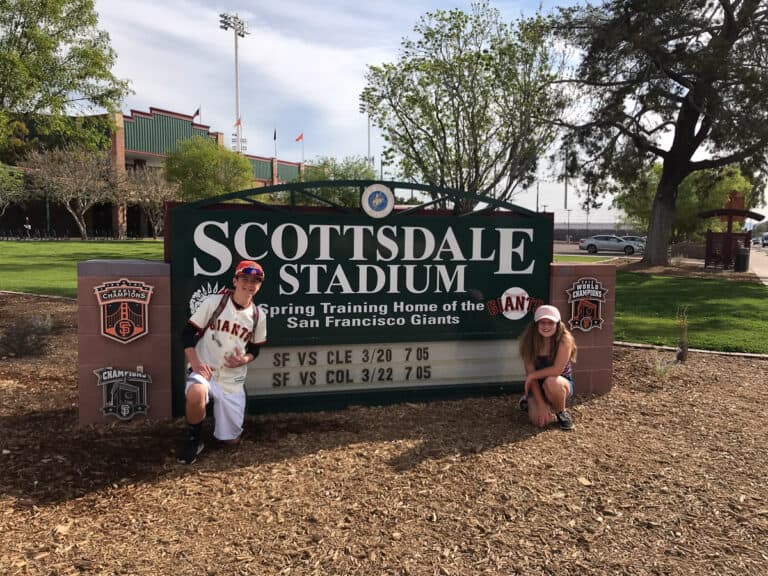
We started taking my son to Spring Training about ten years ago. His favorite part, hands down, was meeting the players and getting their autographs. Now, ten years later, he has a huge autograph collection and has met so many of his favorite players. Those experiences have given him amazing memories and a deeper love for the game. Spring Training has become an annual tradition for us, and sometimes the rest of the family joins in too.
There’s something special about helping your child connect with their favorite players. Seeing the excitement on their face when they get an autograph or have a quick chat with a player is priceless. Spring Training is one of the best ways to create those moments because of its relaxed atmosphere and the accessibility of the players.
In this post, I’ll share tips for getting autographs at Spring Training, from the best way to approach players to finding the best spots at the ballpark. Whether it’s your first time or you’re looking for ways to help your child make the most of the experience, these tips will make sure you’re ready to have a great time and create some unforgettable memories. This post is all about helping your child meet their favorite players and making Spring Training a family tradition.
Plan Ahead for Success: Your Best Chance to Meet Players
#image_title
When it comes to getting autographs at Spring Training, planning ahead is the best way to set yourself up for success. Knowing when and where to go can make all the difference in helping your child meet their favorite players and create unforgettable memories.
Start by researching team schedules and game times. The Cactus League hosts teams like the White Sox and Cubs in Arizona, while the Grapefruit League features teams such as the Yankees and Red Sox in Florida. Choosing the league where your favorite team practices is key. If you’re unsure, look for fields near your vacation spot or use your child’s favorite players as a guide.
Once you know your team’s Spring Training ballpark, look at a map of the area. If autographs are your top priority, staying at a hotel near the ballpark, such as Camelback Ranch or Salt River Fields, is a smart move. Being within walking distance means you can avoid parking lot hassles and get to the gates early. Arriving early gives you the best chance to secure a prime spot near home plate or along the front row where players walk by.
If your team is playing road games during your visit, check the opposing team’s ballpark. Traveling to a different Spring Training location can sometimes mean smaller crowds, which gives you a much better chance of getting autographs.
Lastly, keep logistics in mind. A rental car can be helpful for visiting multiple parks in one trip. And remember, many fields have extra features like batting cages or autograph areas, so look into the details of each ballpark. Planning ahead isn’t just about the schedules; it’s about making the trip as smooth as possible for everyone.
With a little preparation, you’ll be ready to help your child meet their baseball heroes and have an incredible Spring Training experience.
What to Bring to Get the Best Spring Training Autographs
Being prepared with the right items can make a big difference when it comes to getting autographs at Spring Training. Packing the essentials not only helps your child feel confident but also increases the chances of a successful autograph session.
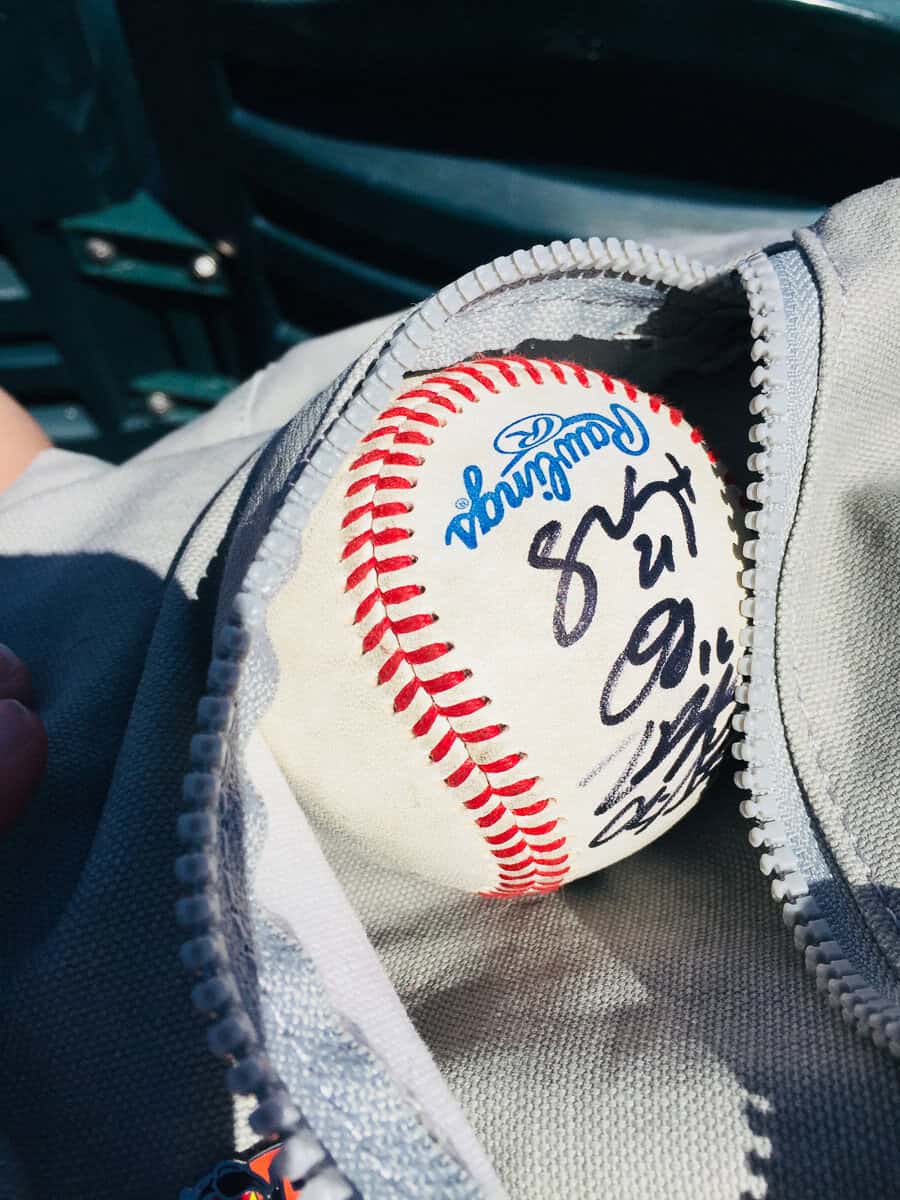
Start with the basics: baseballs, baseball cards, or team merchandise are perfect for players to sign. Baseballs are always a favorite because they display autographs so well.
If you’re going for more than one day, bring just a few balls the first morning. Chances are, you’ll collect more during batting practice or after catching a fly ball. This way, you’ll have extras for the following days.
Don’t forget to bring the right pens. Sharpies work well for cards and photos, but a ballpoint pen is better for baseballs since it doesn’t smudge.
Keep a cell phone handy for snapping quick photos if players allow it. A photo with your child and a player is often the best part of the experience.
Dressing in your favorite team gear can also make a big difference. It shows support and helps your child stand out in the crowd. Whether it’s a team hat, jersey, or t-shirt, players often notice fans who rep their team colors. A little team spirit can go a long way.
For good measure, pack a small bag with snacks, water, sunscreen, and a hat. Last year, we brought extra sunscreen and were so glad we did after spending hours on the practice fields. Being prepared for long days in the sun makes the entire experience much more enjoyable.
With these items in hand, your child will be ready to meet their favorite players, collect autographs, and create memories they’ll cherish for years to come.
Essential Items to Bring for Spring Training Autographs
- Baseballs: Start with a few on the first day; you may collect more during batting practice or from players.
- Baseball Cards: Bring plenty of players cards. Your team plus other teams you may run into those players too!
- Team Gear: Easy-to-carry items for players to sign.
- Sharpie Markers: Great for signing cards, photos, and team merchandise.
- Ballpoint Pens: Best for signing baseballs to avoid smudging.
- Cell Phone: Perfect for quick photos or capturing candid moments with players.
- Favorite Team Apparel: Hats, jerseys, or t-shirts to help your child stand out and show team pride.
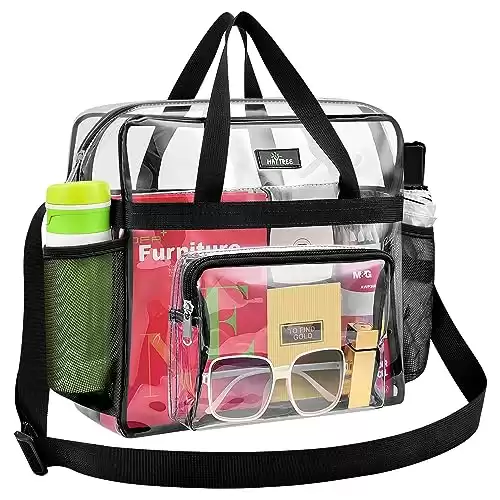
- Small Bag: To carry essentials like sunscreen, snacks, water, and extra pens. If you are going into the stadium after review the policies most require a clear bag.
- Hat and Sunglasses: For sun protection during long hours on the practice fields.
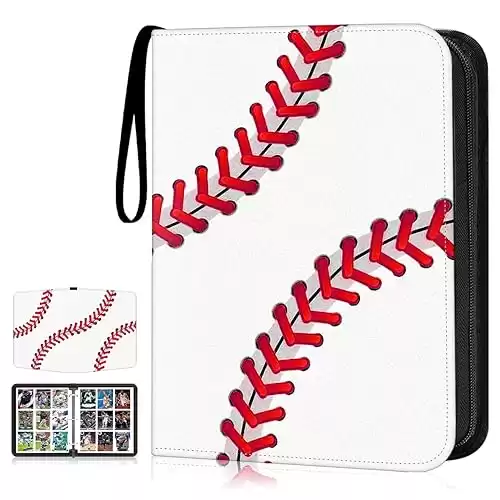
- Autograph Book or Folder: To keep signed cards or photos organized and protected.
- Foldable Chair or Blanket: For lawn seats
- Baseball Glove: Handy for catching fly balls during batting practice.
Stay Organized for Autograph Success at Spring Training
Spring Training can be a fast-paced environment, especially when players are moving quickly between practice fields or to the dugout. Being organized ensures your child is ready when the opportunity to get an autograph comes. A little preparation can go a long way in helping them feel confident and excited.
Know the Players and Be Ready to Call Them Out
Before you go, look up your favorite team’s roster. Most team websites provide photos and names, which can be printed out for reference. This helps your child recognize players as they approach. Instead of asking, “Who are you?” they’ll be able to confidently say, “Mr. Crawford, would you please sign my baseball?” Players appreciate being addressed politely and by name, which can increase your chances of success.
Organize Baseball Cards for Quick Access
Baseball cards are a great option for autographs, but they need to be organized. Use an album with card holders and arrange them alphabetically. This makes it easy to quickly grab the right card as a player approaches. Another option is to use a sketchbook and secure the cards with painter’s tape. This keeps the cards undamaged but accessible. Once signed, place the cards in protective holders to prevent smudging—just be sure the ink has dried first.
Separate Signed and Unsigned Baseballs
If your child is collecting autographs on baseballs, it’s important to keep the signed and unsigned ones separate. You don’t want to accidentally hand a signed ball to another player. A good idea is to have one ball specifically for random player signatures. My son keeps a “team ball” where he gathers multiple signatures from players he meets. This saves individual balls for his favorite players and keeps his collection organized.
Prepare for a Fast-Paced Atmosphere
When a player is walking by, your child needs to act quickly. They’ll need to identify the player, grab the correct card or ball, and have a pen ready—all in a few seconds. Staying organized and practicing a quick routine will help them feel confident and prepared.
Shop our picks

|
|
|
|
Primary Rating:
3.5
|
Primary Rating:
3.5
|
Primary Rating:
3.5
|
|
$11.99
|
$21.99
|
$13.99
|
Mom or Dad’s Role: Supporting Your Child’s Spring Training Experience
Spring Training is a fun and safe environment, but younger kids still need your support to make the most of it. As a parent, your role is to assist, organize, and capture those memorable moments while ensuring your child has a smooth and stress-free experience.
Be There for Support and Safety
When my son was little, I never left him alone at the fields. He loved meeting players and wanted to get there by 7:00 a.m.—sometimes even earlier! Back then, Scottsdale Stadium had a designated spot near the locker room for kids to meet players. While that setup no longer exists, many fans still gather by the parking lot or along the sidewalks, hoping to catch players on their way in. Some major league players still stop to sign, making it a great bet for autographs.
Help Them Stay Organized
A big part of my role was helping my son stay organized. I carried a bag with unsigned balls and another for signed ones.
I also kept extra pens handy in case one ran out mid-signature. After a card was signed, he would hand it to me, and I’d immediately place it in a card holder. This kept the autograph safe from smudges or damage and allowed him to move on quickly to the next player. Having this system ensured his items stayed secure, and he could focus on meeting as many players as possible.
Our first year, we learned a tough lesson when my son set his bag of signed balls down to get an autograph, and it disappeared. After that, I always kept the signed items with me to avoid any heartbreak.
Capture the Memories
While my son collected autographs, I focused on taking photos so he could remember these moments forever. When he wanted a picture with a player, my job was to snap the photo quickly and get it right. Capturing his excitement in those moments was priceless and something we still look back on today.
As a parent, being there to support, organize, and document these experiences is the best bet for creating lasting memories. Your child will not only have an autograph collection but also incredible stories to share for years to come. Good luck, and have a great job out there making memories!
Best Spots for Autograph Opportunities at Spring Training
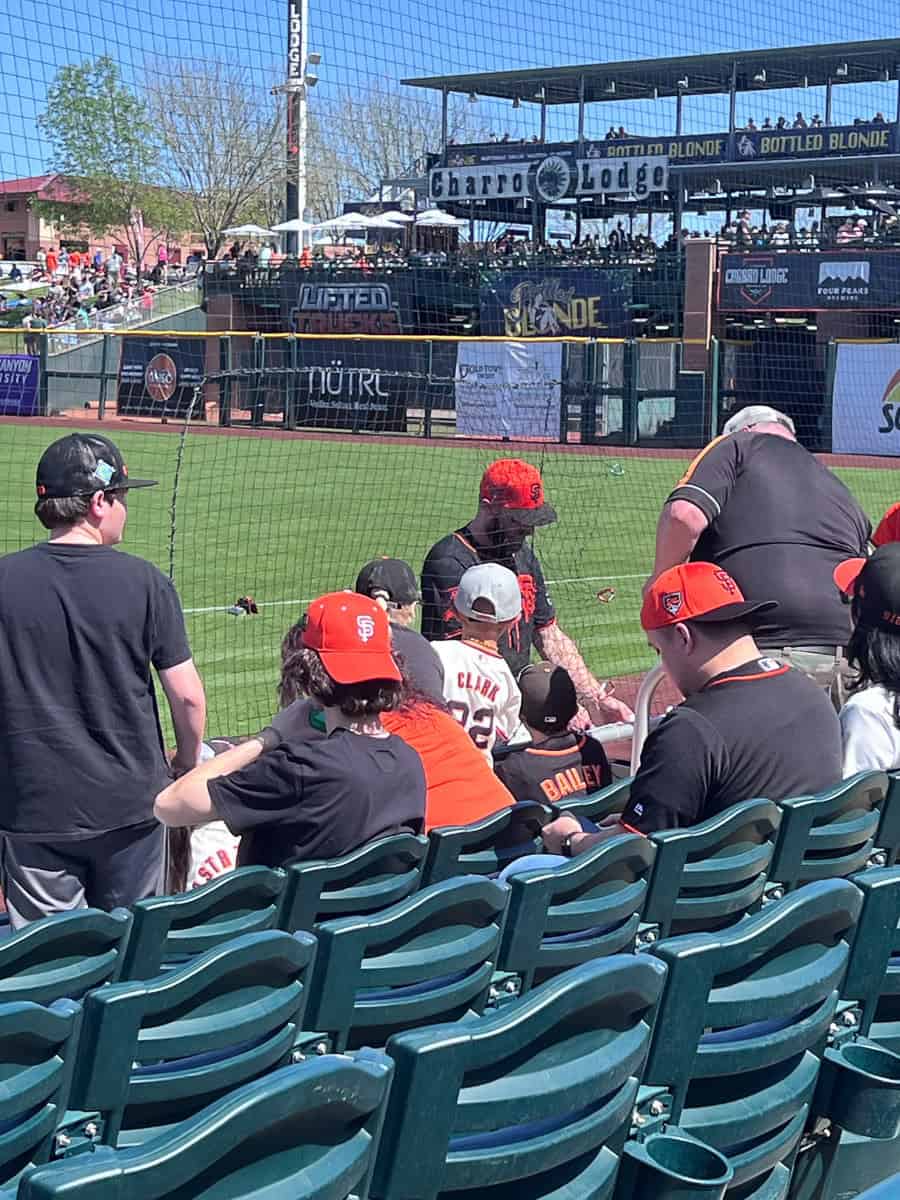
Finding the right spot is one of the most important parts of getting autographs at Spring Training. Knowing where to be and when to be there can make all the difference. Here are some of the best places to position yourself for an autograph opportunity.
1. Player Arrival Areas
One of the best places to catch players is near the locker room as they walk in from the parking lot. While some stadiums, like Scottsdale Stadium, no longer have designated autograph areas near the locker rooms, fans can still gather on the sidewalks near player entrances. Players often stop to sign on their way in, especially if you arrive early.
2. Batting Practice Windows
The players have batting practice three hours before the game. You can hang out by the practice fields and get a lot of signatures.
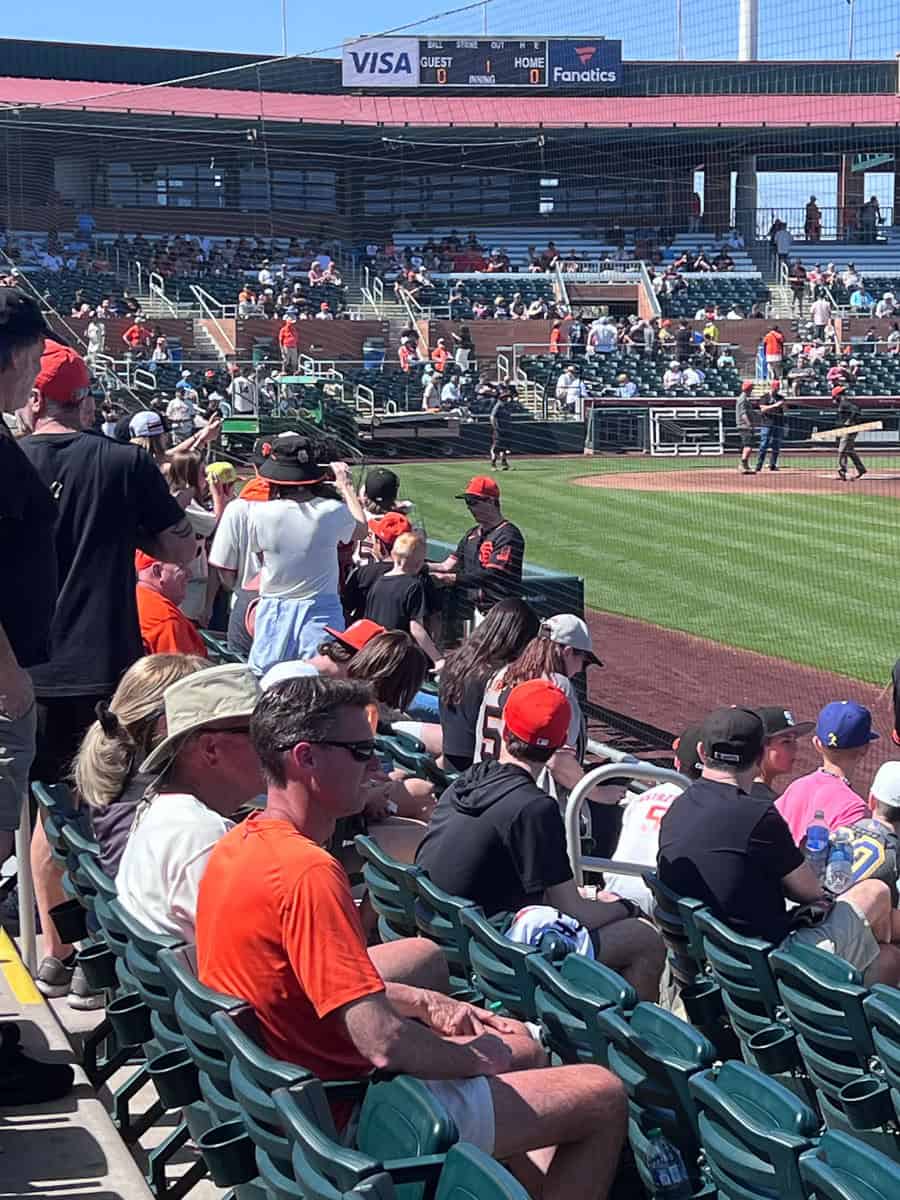
The Giants hold their batting practice on the stadium field. During batting practice, look for the open sections in the nets, often referred to as "windows" or "doors." Kids tend to gather near these spots, as players sometimes come over to sign. If you see a group of kids lined up and a player signing, that’s your cue to join the crowd. It’s a fast-paced opportunity, so be ready with your ball, card, or pen.
Weekdays are usually less crowded than weekends.
3. Pre-Game Warmups
Before the game starts, head toward the first base line or right field. Visiting players warming up on the field are often approachable and more likely to stop and sign. This is also a great time for kids to interact with players, as they’re more relaxed before the pressure of the game begins.
4. Dugout and Autograph Alley
Being near the dugout is another prime spot. Players walking by are often willing to sign, especially for younger fans. Some stadiums have an area referred to as autograph alley, which is a designated space for player interaction. It’s worth checking out if the stadium you’re visiting offers one.
5. Smaller Venues for Intimate Experiences
Smaller Spring Training venues like the Angels Stadium at Tempe Diablo and Salt River Fields provide a more intimate setting for fans. These ballparks often have less crowded areas near the back fields, making it easier to catch a player’s attention.
Timing Is Everything: When to Get Autographs at Spring Training
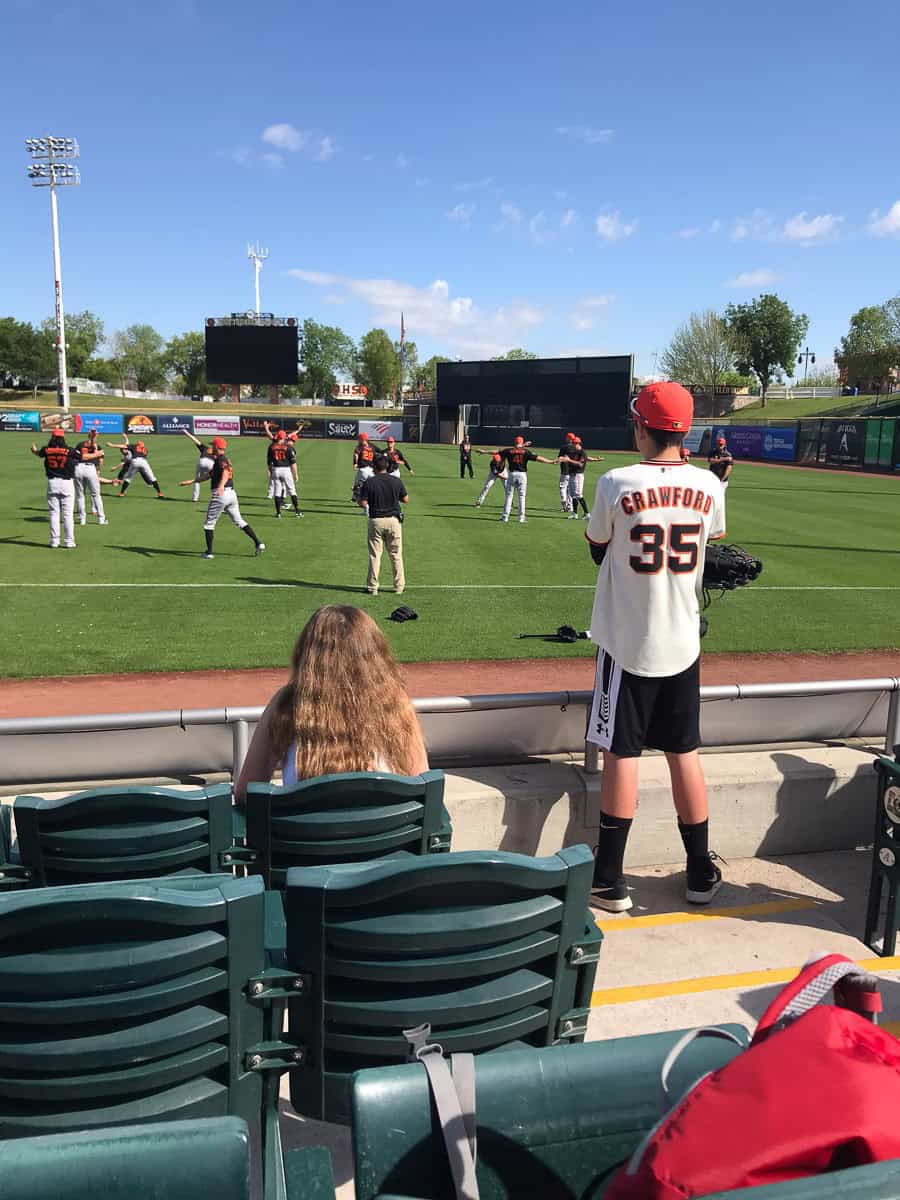
Knowing when to ask for autographs can make all the difference in your child’s Spring Training experience. Players are more approachable during specific times of the day, and understanding their routines will give your child the best chance of success.
Before the Game: Arrival and Batting Practice
The best time to get autographs is before game time, when players are relaxed and not yet focused on the field. Arriving early—at the crack of the bat—increases the chances of interacting with players as they head to the practice fields.
During batting practice, players often stop to interact with fans, especially near the dugouts or along the first base line. Keep an eye on the "windows" in the batting nets, where kids gather. If you see a player signing, act quickly—timing is everything.
During Warmups: Another Great Opportunity
Warmups are another prime time to catch players. Visiting team players are often approachable along right field or near home plate. This is a quieter moment, before the pressure of the game sets in, and players may be more open to signing autographs for fans.
During the Game: Not the Best Time
Once the national anthem is played and the first pitch is thrown, players shift their focus to the game. It’s rare for players to sign autographs during this time, as they’re either on the field or preparing to bat. If your child misses an opportunity earlier, let them know that this is a great time to ask for toss up balls when the players head back into the dug out at the end of an inning.
After the Game: A Final Chance for Autographs
If you didn’t get an autograph before or during the game, running to the player exit after the game can be another opportunity. Players often leave the locker room or head to their buses soon after the game ends, and fans gather near these areas for one last chance to meet them.
Keep in mind, though, that this time can be crowded, and the competition for autographs might be intense. It’s also worth noting that during home games, big-name players often leave after the fourth or fifth inning. If your child is hoping to meet a star player, earlier in the day might offer a better opportunity.
Despite the challenges, some players are more relaxed after the game and may take a moment to stop and sign. Help your child stay organized with their pen and item ready, just in case they get the chance.
Be Polite and Respectful: A Key to Getting Autographs
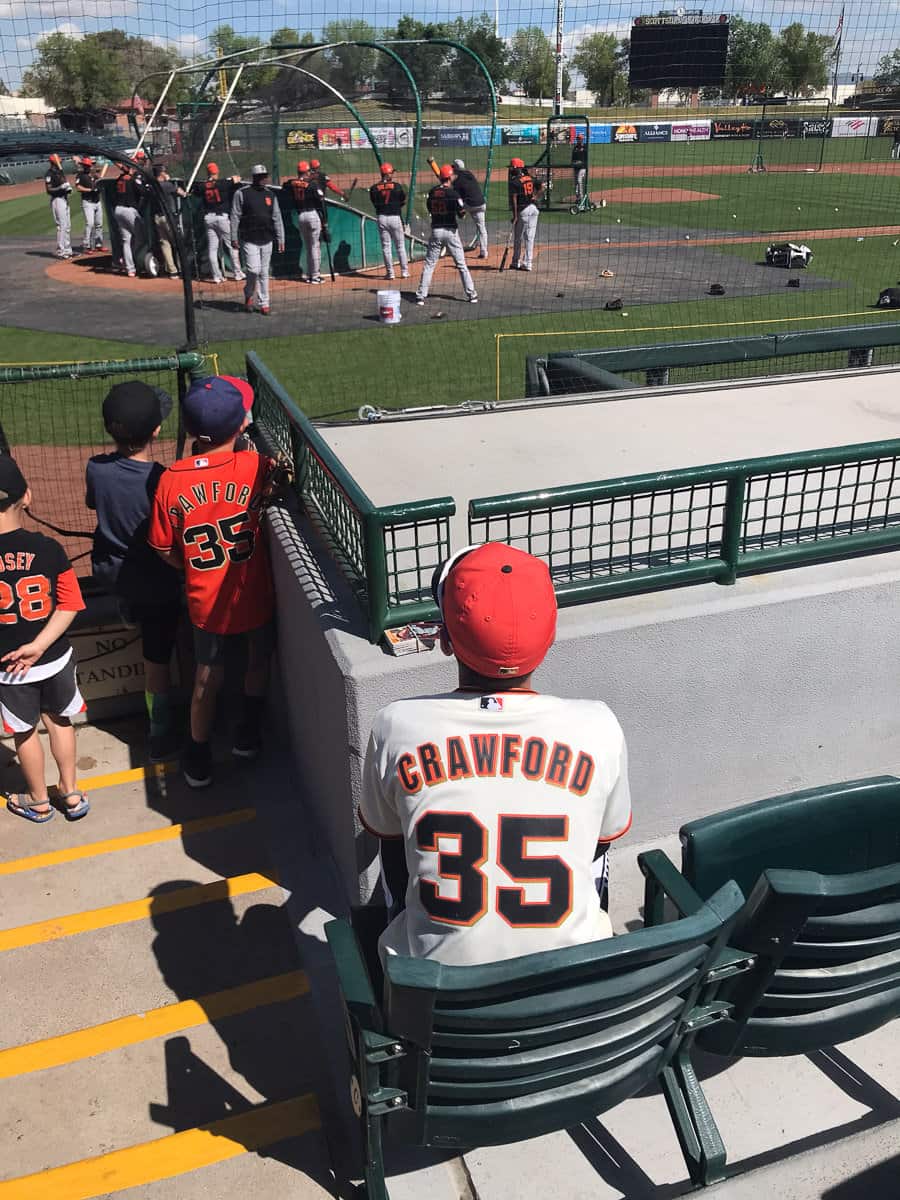
Respect and politeness go a long way when asking for autographs. Players are usually very gracious, especially with kids, but it’s important to remember that they are at work. Some days they may not feel up to signing, particularly if they’ve received tough news about their spot on the roster. Teaching your child to be courteous and understanding can make all the difference. A positive attitude not only leaves a great impression but may also lead to a signature later.
Teach a Respectful Approach
We always taught my son to address players respectfully. He would use their proper names, like "Mr. Crawford," when asking for an autograph. While many kids called players by their first names or nicknames, my son seemed to get more engagement with his respectful tone. Players often paused to acknowledge his politeness, and it showed them he appreciated their time.
When approaching players in busy areas, such as the locker room entrance or player entrance, it’s even more important to be courteous. These areas can get crowded, and a polite approach helps your child stand out. Players are more likely to stop for someone who shows genuine enthusiasm and respect.
One year, right before a game, Buster Posey walked onto the field, and all the kids were buzzing with excitement. They started shouting, “Buster, will you sign?” My son, staying calm, called out, “Mr. Posey, will you please sign?”
Apparently, that polite approach made all the difference. Buster stopped, smiled, and signed my son’s card. He was absolutely thrilled! It’s a memory we still talk about every Spring Training, and it showed us how far a little respect
Respect Their Time and Space
Players often have packed schedules during Spring Training. Some may be focused on their next task and unable to sign at that moment. Remind your child that it’s okay if a player declines to sign. They may be able to come back later or catch the player on another day.
Encourage your child to be patient and not overwhelm players by asking for too much. One item per player is usually a good rule. This also shows consideration for the other fellow fans waiting for an autograph.
Make It About Genuine Connection
When your child interacts with their favorite players, encourage them to express their admiration sincerely. A heartfelt “Thank you for signing!” goes a long way in making the experience memorable for both the fan and the player.
Being polite and respectful not only helps your child get autographs but also creates positive interactions that make Spring Training even more special. It’s all about teaching them to appreciate the moment and the players who make it possible.
Engage with Fellow Fans: Building Community at Spring Training
One of the best parts of Spring Training is the chance to connect with other fans. Engaging with fellow fans and experienced autograph seekers can provide valuable tips and create a sense of camaraderie that makes the experience even more memorable for you and your child.
Learn from Others
Every year, my son would meet a new friend during the early morning autograph sessions. The kids bonded over their excitement for the players, while I got to know the other parents who were there with their children. Many parents were eager to share their own tips, like the best spots to stand or which players were likely to sign that day. These conversations often gave us helpful insights we wouldn’t have known otherwise.
Talking to seasoned autograph seekers can also be a great way to pick up strategies for getting signatures. These fans often have years of experience and know the routines of certain players or the best times to wait at specific locations. Just be mindful of who you take advice from, as not everyone has the same approach or intentions.
Be Aware of Unsavory Practices
While most fans are respectful, there are some who take advantage of the system. I’ve seen adults ask kids to get items signed for them, knowing players are more likely to engage with children. Unfortunately, this can backfire. On more than one occasion, I’ve seen a child get an adult’s item signed, only for the player to refuse to sign the child’s card, saying, “I just signed for you.”
This is another reason to stay close to your child. If someone asks your child to get an item signed for them, you can politely decline to avoid any confusion or disappointment. Protecting your child’s experience is important, and staying together helps ensure they have a positive interaction with the players.
Enjoy the Community Spirit
Part of what makes spring training games so special is the friendly and relaxed atmosphere. Fans are generally there to enjoy the day, cheer for their teams, and share their love of baseball. Building connections with other families and fans can enhance the experience for both you and your child, creating memories that go beyond just collecting autographs.
Special Tips for Success: Unique Ways to Meet Players at Spring Training
Spring Training offers so many exciting opportunities to meet players and even catch glimpses of legends. By exploring a few unique options, you can make the experience even more memorable for your child.
Look for Retired Players and Special Appearances
Some of the most thrilling moments happen when retired players make surprise appearances. One year, my kids were just hanging out at the field when Willie Mays arrived. He didn’t sign autographs, but we did manage to get a picture, and the kids were absolutely thrilled to see him in person.
Similarly, we once spotted Barry Bonds. Although he wasn’t signing, just seeing such a legendary player was unforgettable for my son. Keep an eye out for appearances by former greats. You might find them around Old Town Scottsdale or during special events.
Promotional events tied to charities are another great way to meet players. Some players participate in autograph sessions to support good causes, providing a more structured and guaranteed opportunity for your child to interact with them.
Common Mistakes to Avoid: How to Make the Most of Spring Training
While Spring Training is a great opportunity for your child to meet players and collect autographs, there are some common mistakes to avoid. Being prepared and mindful can help ensure a smooth and enjoyable experience.
Forgetting Essentials
One of the easiest mistakes to make is forgetting to bring the basics. Spring Training days can be long, so pack plenty of water, snacks, and sunscreen. A quick snack like hot dogs from the concession stand can tide your child over during a break, but having your own snacks can save time and keep everyone happy while waiting for autographs.
Remember to bring autograph supplies too—extra pens, baseballs, and a bag to keep signed and unsigned items separate. Missing these essentials can make the day more stressful than it needs to be.
Overwhelming Players
It’s important to teach your child not to overwhelm players with too many items to sign. Asking for one autograph per player is not only respectful but also increases the chances of getting signatures from more players. Approaching players with a thoughtful and polite attitude often gives your child a much better chance of a positive interaction.
Timing also matters. Avoid crowding players during moments when they’re clearly focused, such as right before a baseball game or when they’re heading to the field. Respecting their space and time shows appreciation for their work.
Criticizing Players
Surprisingly, I’ve seen fans criticize players when they didn’t stop to sign. This is never a good idea. Players have demanding schedules, and they’re often juggling responsibilities while trying to prepare for the game. Teaching your child to stay positive and respectful, even when a player declines to sign, ensures they maintain a good experience and potentially get another opportunity later.
By avoiding these common pitfalls, you’ll help create a better experience for your child and show the players the respect they deserve. Preparation, patience, and kindness go a long way in making Spring Training a memorable and rewarding adventure!
Conclusion
Spring Training is more than just collecting autographs—it’s about creating special moments with your child. Whether they get one autograph or ten, the excitement of meeting their favorite players and sharing the experience with you is something they’ll remember for a long time.
With a little preparation and patience, your child can have a rewarding experience that extends beyond the full field of play. They’ll not only meet the stars of today but also build a love for the game that lasts into regular-season games and beyond.