When my daughter first joined her volleyball team, I found myself on the sidelines, puzzled by terms like "setter," "libero," and "opposite hitter." Like any parent new to the sport, I wanted to quickly understand the game to fully enjoy her matches and have meaningful conversations about her day on the court. If this sounds familiar, you're in the right place!
This post is designed to demystify volleyball positions for parents and new players alike. You'll learn not only the names and locations of each position but also the unique roles and skills required for each spot on the team. Understanding the different and various volleyball positions enhances the complexity of the game, showing how each role contributes to the team's success in its own unique way. From understanding why the setter is the team's strategic leader to how a libero can change the game with their defensive skills, we're covering it all.
By the end of this article, you'll have a solid understanding of each position on the volleyball court, enabling you to follow the game more closely and support your young athlete with confidence. Whether you're cheering from the bleachers or discussing the latest match at home, you'll feel more connected to the exciting world of volleyball. Let's dive into the details and get you up to speed on the essential roles that make a volleyball team tick!
Understanding the Volleyball Court: Layout and Positioning

Exploring the Volleyball Court Layout
Though simple in appearance, the volleyball court is meticulously designed for swift action and strategic play. It is divided into two equal halves by a net and stands at a standard height—men's competitions at 7.97 feet and women's at 7.35 feet. Each team occupies one-half of the court, and understanding this layout is crucial for grasping the game's dynamics.
How Volleyball Positions Function
Volleyball is more than just sending the ball over the net. Players move through rotations every time they win a serve from the opposing team, ensuring each player takes on various roles throughout the match. This rotation system maintains fairness and adds a layer of strategic complexity, requiring players to be versatile and adaptable.
Detailed Breakdown of Player Positions
There are six principal positions in volleyball, split between the front and back rows. The front row is home to the left side hitter, middle blocker, and right side hitter, each positioned strategically near the net. The back row hosts the libero, known for their distinct jersey and defensive prowess, the defensive specialist, and the setter, who orchestrates the attack by setting up the ball.
Team Dynamics and Substitutions
Substitutions play a vital role in the game, allowing teams to adapt to the flow of play and bring in specialists like a backup setter or defensive players at critical moments. Each team can make substitutions to react to the opposing team's strategy or compensate for fatigue, with each substitution strategically planned to optimize team performance.
Indoor Volleyball Team Considerations
Playing indoors, volleyball teams must adapt to factors like lighting and floor type, which can affect play. Indoor volleyball teams often practice in specific locations to familiarize themselves with these environmental aspects, enhancing their ability to perform under various conditions.
Understanding these aspects of volleyball helps spectators and players alike follow the game more intuitively. It reveals the intricate "dance" of positioning and strategy that makes volleyball a compelling sport to watch and play.
Front Row Positions in Volleyball
Middle Blocker Role
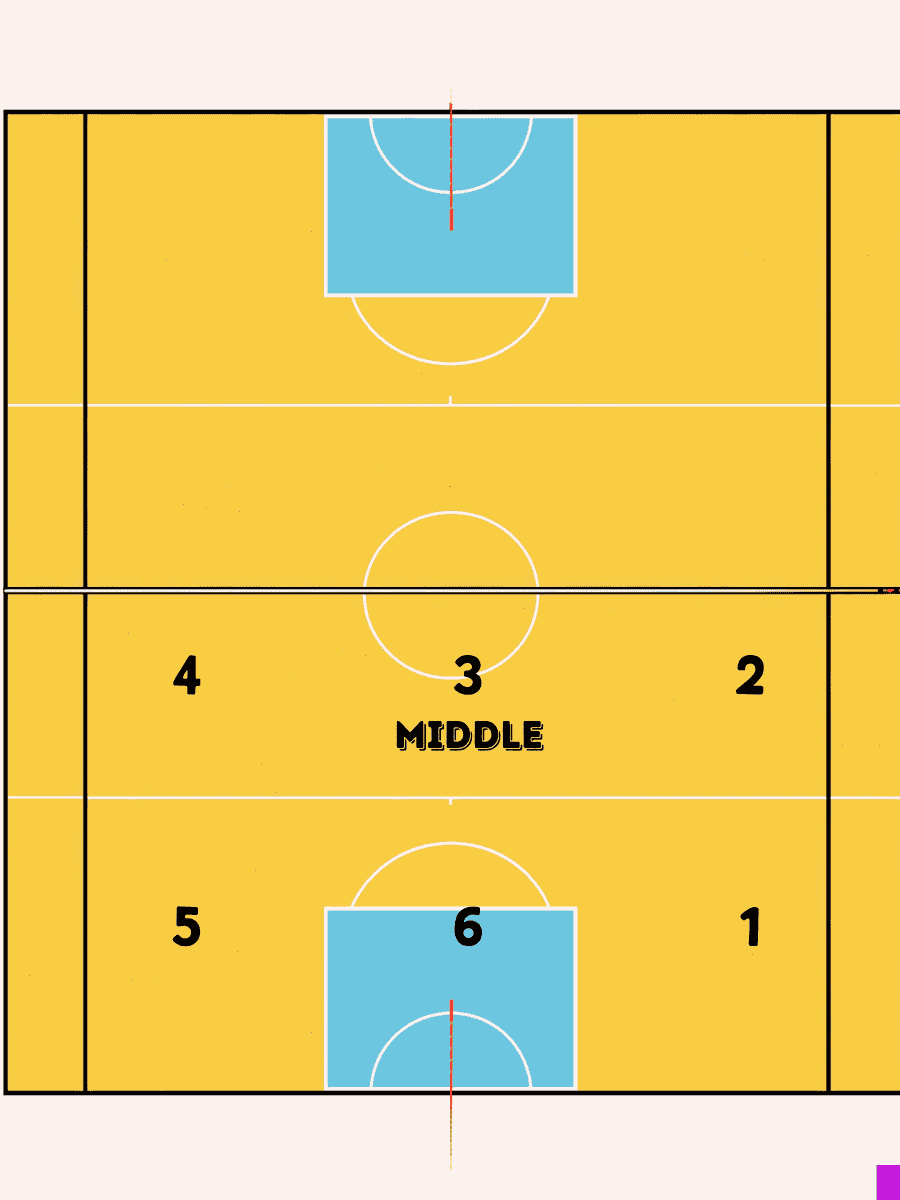
Positioning and Role of the Middle Blocker: Positioned at the center of the net, the middle blocker is pivotal for a volleyball team's defense. Their primary role involves intercepting spikes from opposing hitters, making them the first line of defense during volleys. Often referred to interchangeably with the term "middle hitter," this position also encompasses responsibilities that go beyond mere blocking, including initiating attacks when opportunities arise.
Set-Up by the Setter: While predominantly a defensive stronghold, the middle blocker also plays a crucial offensive role during attacks. The setter is instrumental in this dynamic, quickly delivering the ball to the middle blocker for what are known as "quick sets." These are fast, hard-to-defend spikes executed close to the net, exploiting the middle blocker's strategic positioning.
Executing Quick Attacks: Middle blockers leverage their significant height and vertical reach to execute these quick attacks. Their aim is to drive the ball swiftly into the opponent's court before the defensive setup is fully organized, capitalizing on the speed and surprise of the attack to score points.
Strategic Importance and Special Responsibilities: In addition to their blocking and attacking duties, middle blockers orchestrate much of the team's net defense. They guide other players in their blocking responsibilities and cover extensive areas of the net during team blocks. The role's strategic importance extends to quick decision-making, adapting to the setter's plays, and maintaining a high level of alertness to respond effectively to the game's flow.
Outside Hitter
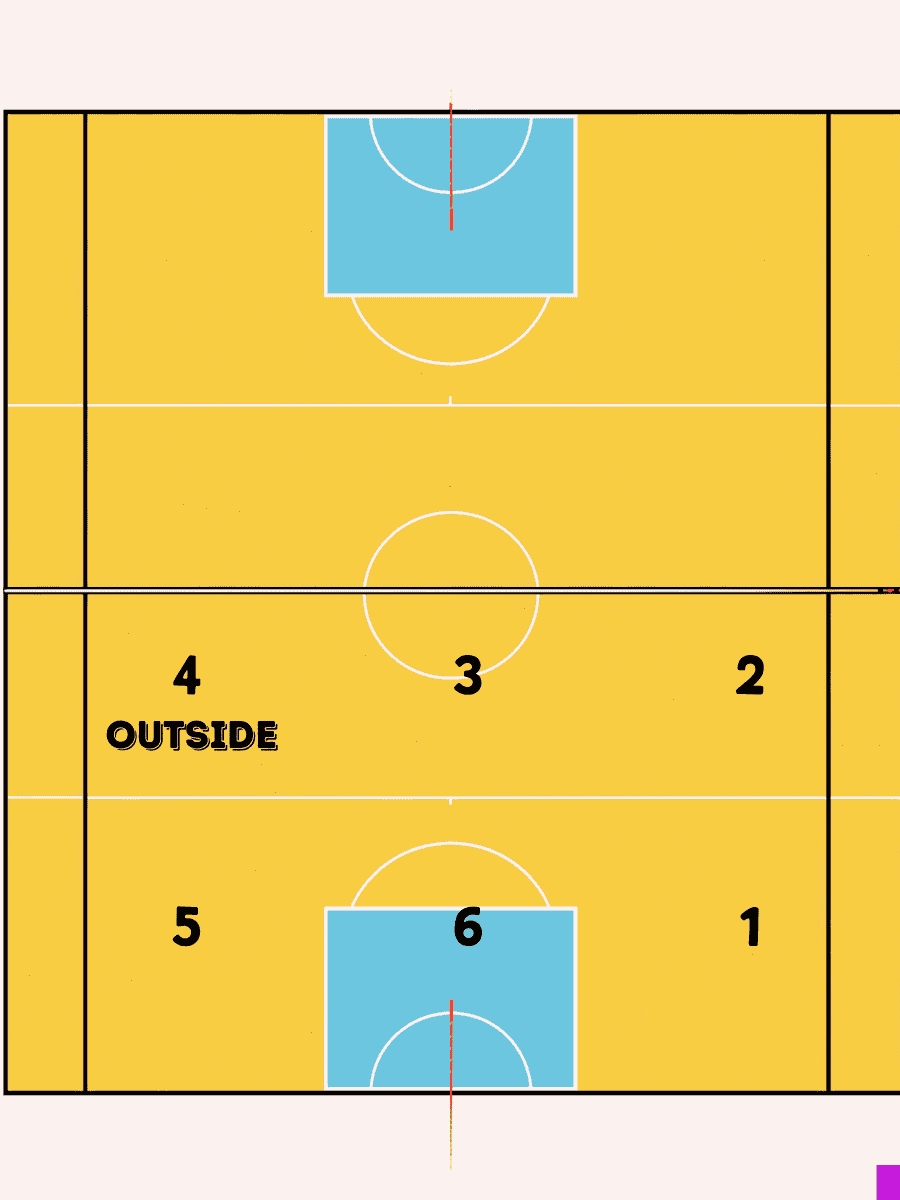
Positioning and Role of the Outside Hitter: The outside hitter, often positioned on the left side of the court, is a pivotal player for both offensive and defensive maneuvers in volleyball. Known as a wing spiker in some regions, this role requires agility and strategic thinking, as they are typically the first to handle the ball after the serve. Their positioning allows them to play a significant part in the initial setup of the offense, often determining the momentum of the play.
Interaction with Front Row PlayersI: n their frontline position, outside hitters work closely with other front row players, such as the middle blocker and opposite hitter, to form a cohesive offensive and defensive unit. The dynamics among these players, especially their coordination with outside blockers, are crucial for forming an effective barrier against opponents' attacks and for orchestrating their own offensive strategies.
Set-Up by the Setter: The setter plays a critical role in maximizing the potential of the outside hitter by providing sets that are tailored for powerful diagonal or line spikes. These sets are specifically designed to leverage the outside hitter's ability to attack from different angles, making it possible to exploit gaps in the opponent's defense effectively.
Executing Kill Shots: Utilizing their refined hitting skills, outside hitters execute kill shots aimed at challenging areas of the opponent’s court. These shots are crucial in bypassing blockers and securing points, requiring precise timing and power. The ability of outside hitters to switch between aggressive spikes and more strategic plays, like tips or roll shots, depending on the game's flow, underscores their versatility and critical role in the team's offense.
Strategic Importance: The strategic importance of the outside hitter cannot be understated. As one of the most versatile players on the court, they are often involved in crucial plays that can change the game's direction. Their ability to adapt and respond to the setter's plays and the defensive setup of the opposing team makes them key players in any volleyball match.
The Right-Side Hitter
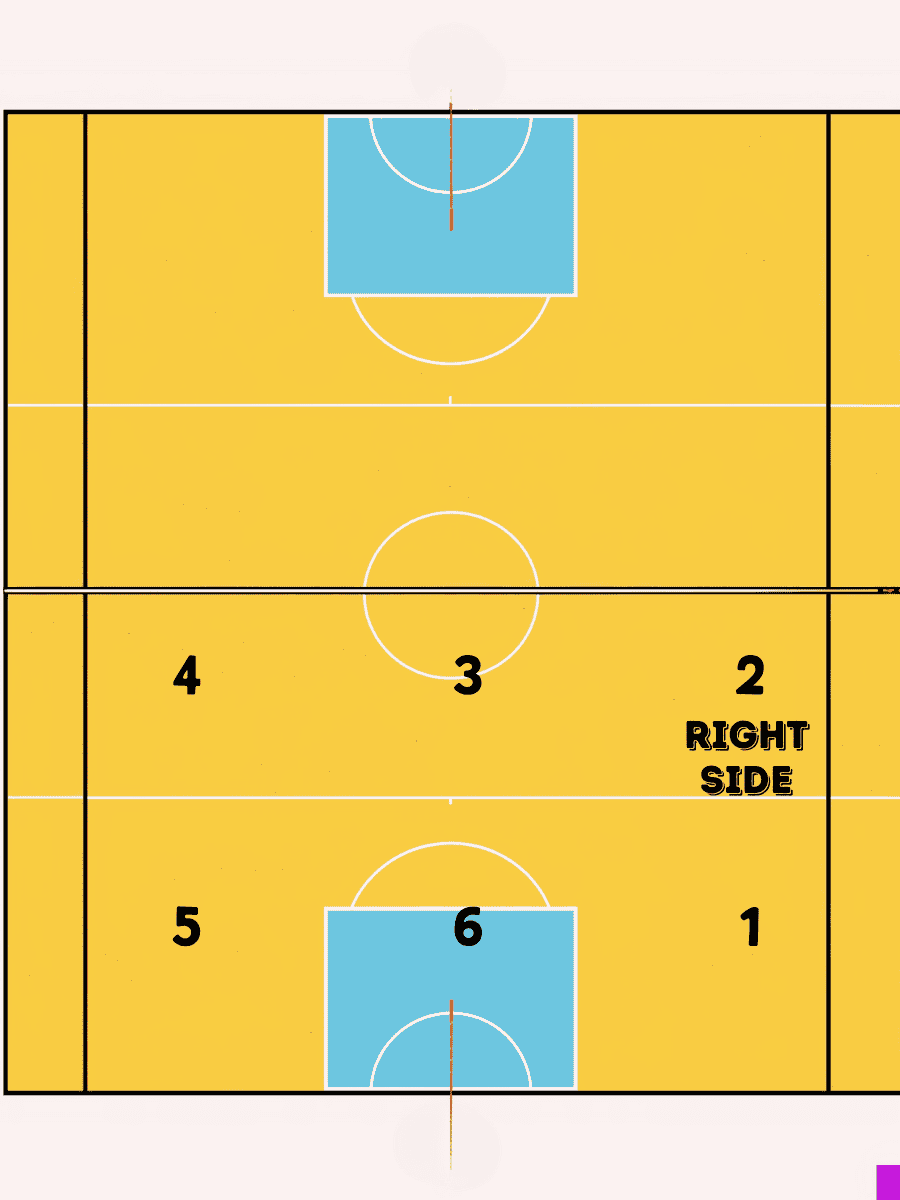
Positioning and Role of the Right-Side Hitter: The right-side hitter, also known as the opposite hitter, occupies a crucial offensive position on the volleyball court. Positioned on the right side, they are tasked with managing difficult sets and launching powerful attacks from tight angles. This role is vital for maintaining balance on the court, particularly when the play shifts away from the left-side hitter. Known alternatively as a pin hitter, this position requires versatility and power to handle the diverse challenges that come from playing opposite the setter.
Set-Up by the Setter: The setter plays a pivotal role in facilitating the opposite hitter's attacks. Through a maneuver known as the "back set," the setter provides a high and precise set to the right side, where the right-side hitter or pin hitter is ready to strike. This type of set is designed to capitalize on the hitter's ability to attack from the right, using both power and strategic angling to challenge the opponent's defense.
Executing Kill Shots: Using the precise sets provided by the setter, the right-side hitter executes what are known as kill shots. These are powerful spikes aimed at landing the ball on the opponent's side, crafted to be difficult to defend against due to their speed and trajectory. Right-side hitters, especially those known as pin hitters, often face the opponent’s main blockers, requiring them to utilize not just strength but also tactical skill in adjusting their attacks to bypass these defenses.
Strategic Importance: The strategic importance of the right-side hitter cannot be overstated. Often responsible for critical attacks during high-pressure moments, they must possess strong hitting skills, the ability to quickly judge the positions and effectiveness of blockers, and the agility to adjust their hitting strategy as needed. Their role is pivotal not just in executing offensive plays but also in setting the tone and pace of the game, making them key players in any competitive volleyball team.
By understanding the multifaceted role of the right-side hitter, spectators and players alike can appreciate the depth of strategy and skill involved in volleyball, particularly in how these players manage to turn challenging sets into scoring opportunities.
Back Row Positions in Volleyball
Libero
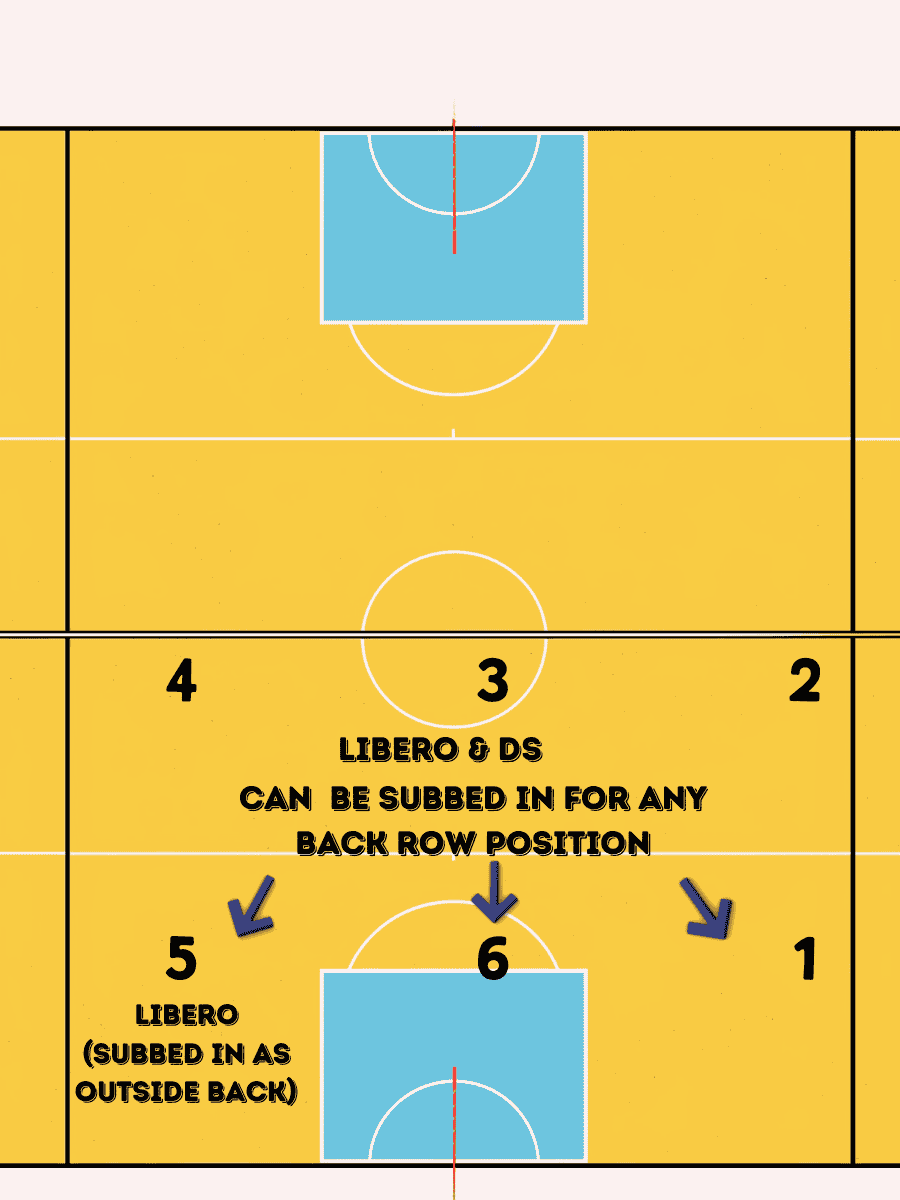
Positioning and Role: The libero is easily recognizable by their different-colored jersey, marking them as the defensive specialist on the team. This player does not participate in offensive attacks, focusing exclusively on defensive maneuvers. However, they are allowed to serve if they sub in for a serving position. They often act as a catalyst for turning defense into offense.
Libero's Ability To Substitute Into Game: The libero can substitute for any back-row player at any time during the game, and these substitutions do not count towards the team's total number of allowed substitutions. This special rule lets the libero quickly swap in to serve in a defensive capacity, particularly to enhance the team's ability to receive serves and defend against spikes, without needing to notify the officials or wait for regular substitution breaks. This flexibility is key to maintaining a strong defense throughout the match.
Dynamic Role in the Game: Liberos are crucial for enhancing the team’s defensive stability, specializing in ball control and quick recoveries to keep the play alive. They also play a vital role in serve receive formations, where their skills in handling serves enhance the team's ability to transition from defense to offense.
Unique Substitution Flexibility: One of the key rules for the libero is their ability to substitute for any back-row player without the usual substitution limits. This allows them to enter and exit the game freely, optimizing the team’s defensive setup without the need for formal substitution breaks.
Strategic Importance: The libero's ability to move swiftly and adapt to the flow of the game makes them pivotal in maintaining pressure on the opposing team and setting up offensive opportunities from defensive plays.
Defensive Specialist (also called DS)
Positioning and Role: Similar to the libero, the defensive specialist (DS) excels in back-row defense but differs by having the capability to serve. This role allows for tactical versatility on the court.
Serving and Defense: The DS often steps in to serve and immediately follows up with strong defensive support, particularly in dig and pass situations. This double duty enhances the team’s resilience and consistency in long rallies.
Role in Team Strategy: Defensive specialists are frequently substituted into the game to replace players who may be weaker in serve receive or defense, ensuring the team remains strong in all facets of the game.
Backrow Outside Hitter: Offensive and Defensive Adaptability
- Positioning and Role: The backrow outside hitter typically plays from position 5 (left back) or position 6 (middle back), transitioning between defensive and offensive roles depending on the rotation and play demands.
- Dual Role Execution: When in the back row, their focus is more on defense, including receiving serves and making digs. However, they must also be ready to initiate attacks, utilizing their well-rounded skills to spike from behind the 10-foot line.
- Strategic Importance: This position’s versatility is crucial for maintaining a balanced attack and defense, allowing the team to adapt to the opponent’s strategies and maintain pressure from all areas of the court.
The Setter:
The Setter's Central Role in Volleyball
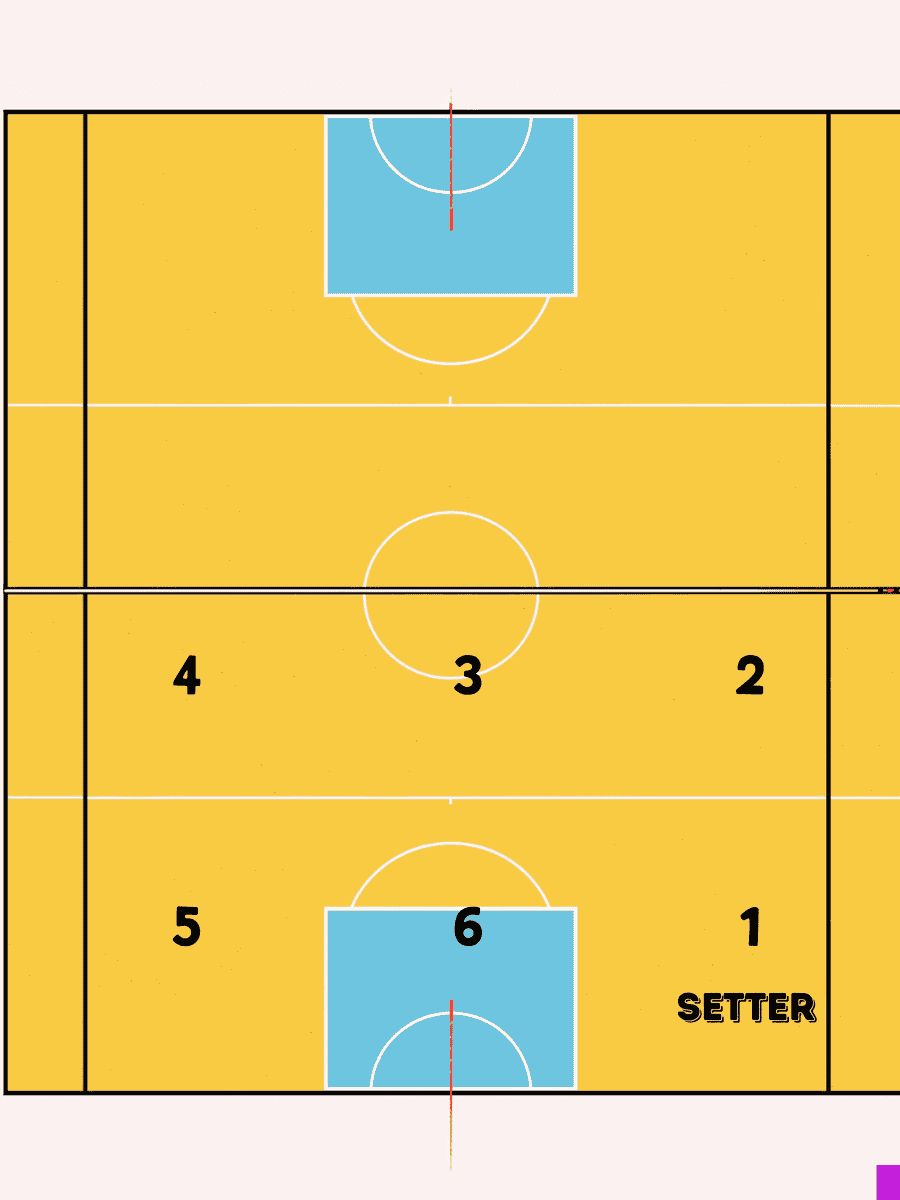
Positioning and Role: The setter is the volleyball team's quarterback, strategically positioned to orchestrate the offense during each play. Their primary responsibility is to handle the second touch, setting the ball for attackers to execute scoring opportunities. This role is crucial in shaping the team's offensive dynamics and maintaining the flow of the game.
Leadership and Strategy: The Heart of a Setter
A setter is not just a technical player but also a key playmaker and team leader. They exhibit strong leadership by guiding the team with clear communication and decisive actions. Their ability to assess the play and make quick decisions underpins their role as the strategic leader on the court, directing the team’s movements and play strategies.
Mastering the Second Touch
The setter's primary job is to manage the second ball after the team's first touch, which is typically a pass or dig aimed at controlling the opponent's serve or attack. This second touch is where the setter's skills truly shine, as they must quickly assess the situation, decide which type of set to deliver, and execute it precisely. The ability to handle the second touch effectively allows the setter to control the game's tempo and set up the attackers for successful spikes.
Executing the Second Touch
Upon receiving the first pass, the setter must deliver a precise set to one of the attackers, aiming for optimal placement to facilitate a successful attack on the opponent’s court. This involves not only technical skill but also a deep understanding of each teammate's strengths and the current dynamics of the game.
Strategic Importance
The decisions made by the setter can significantly influence the direction of the team's play, making this role pivotal in transitioning from defense to attack. A good setter must read the opposing team’s formation and dynamics swiftly and accurately to determine the best setting options, thereby dictating the pace and strategy of the match.
Skills Required
A good setter exhibits strong leadership on the court, guiding the team with clear communication and quick decision-making. They must possess a keen sense of timing and spatial awareness to consistently deliver high-quality sets under pressure, ensuring that each set maximizes the team's chances of scoring.
Middle Back Position:
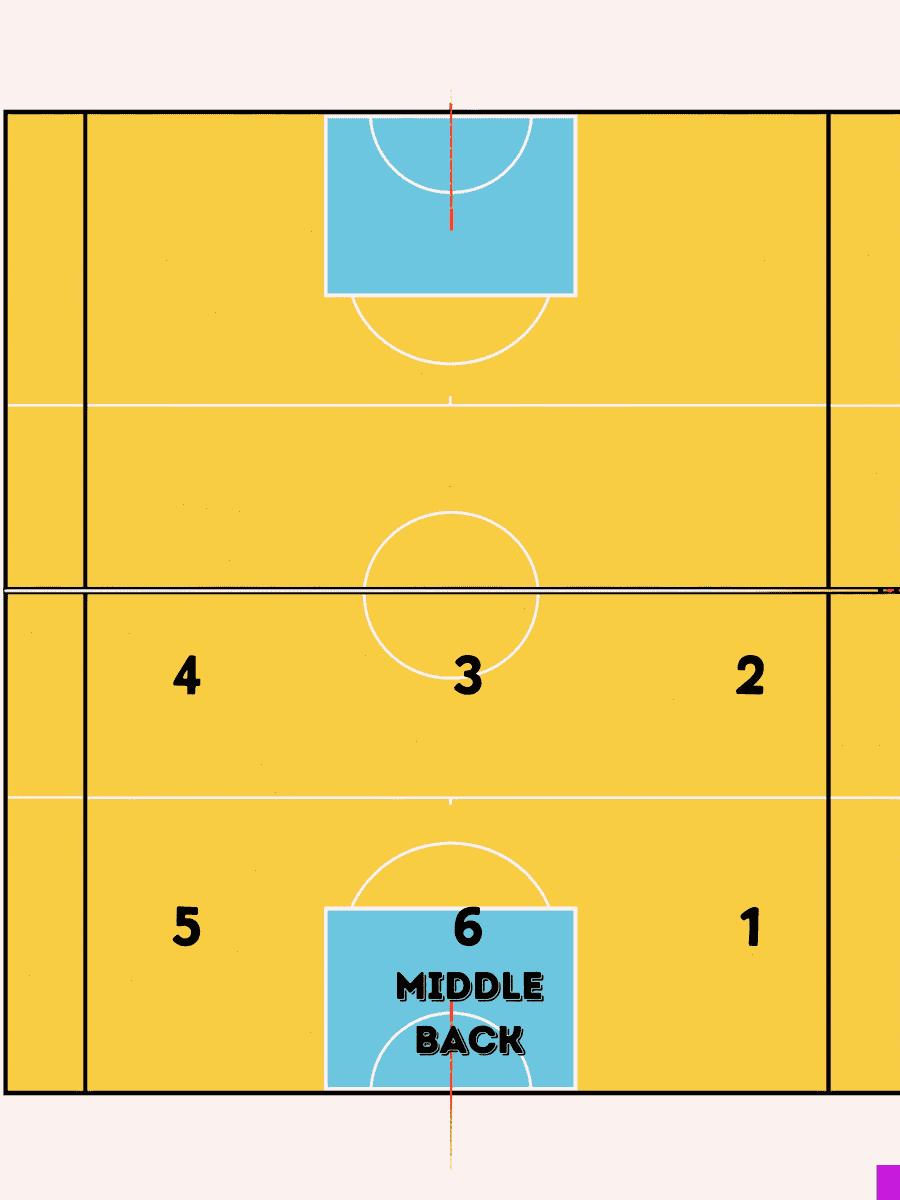
Positioning and Role: The middle back position is a critical part of the back row defense in volleyball. Typically located in position 6, the middle back player is central to the court's defensive efforts. This position requires the player to cover a lot of ground, often acting as the first line of defense against attacks that make it past the front row blockers. The middle back player must be adept at reading the game, anticipating where the ball will go, and positioning themselves accordingly to make crucial digs.
Dual Role Execution: While primarily a defensive position, the middle back player must also be prepared to transition quickly to offensive roles. Their main focus is on defense, which includes receiving serves and making digs to keep the ball in play. However, they also need to be ready to support the team's offense by initiating attacks from the back row. This often involves spiking from behind the 10-foot line, requiring the middle back to have well-rounded skills in both defense and attack. Their ability to switch roles seamlessly is vital for maintaining the team's momentum during fast-paced rallies.
Strategic Importance: The versatility of the middle back position is crucial for maintaining a balanced attack and defense. By effectively covering defensive responsibilities and contributing to offensive plays, the middle back helps the team adapt to the opponent’s strategies and maintain pressure from all areas of the court. This position’s ability to perform under pressure and execute quick transitions is essential for the overall success of the team, making it a key component in both defensive stability and offensive flexibility.
Specialized Roles and Skills in Volleyball
The Crucial Role of the Serving Specialist
- Positioning and Role: The serving specialist has a focused role, primarily responsible for initiating play with powerful and strategic serves. They specialize in serving to gain an early advantage in rallies, disrupting the opponent's setup.
- Executing Powerful Serves: This player's serves are designed to challenge the opponents' reception, either by targeting weak passers or exploiting gaps in the formation. The goal is to create scoring opportunities right from the service line.
- Strategic Importance: The serving specialist significantly impacts the game's dynamics, setting the tempo and putting the opposing team under immediate pressure. Their serves can shift the momentum of the game, making them vital during crucial points.
- Skills Required: Precision, power, and consistency are key traits for a serving specialist. Their ability to perform under pressure and deliver serves that lead to offensive maneuvers is crucial for the team’s success.
Adapting Volleyball Skills for Beach Volleyball
- Positioning and Role Variations: In beach volleyball, positions are less rigid but more demanding due to the environment and the two-player team format. Each player must be versatile, handling multiple roles such as serving, attacking, and defending.
- Executing Skills on Sand: Players adapt their skills to the beach setting, where movement is hindered by sand. This requires greater physical effort and strategic play to conserve energy while remaining effective.
- Strategic Importance: In beach volleyball, the ability to switch quickly between offense and defense is crucial. Players must be adept in all aspects of the game, from precise serves to resilient defensive plays.
- Skills Required: Agility, endurance, and adaptability are essential. Players must excel in multiple volleyball fundamentals, including setting, hitting, and digging, tailored to the unique challenges of sand.
Conclusion
Understanding the various positions in volleyball is key to fully appreciating and enjoying the sport. Each position has unique responsibilities that contribute significantly to the team's overall performance. By learning these roles, you can more deeply engage with the game, whether you're cheering from the stands or discussing strategies with players.
We encourage you to keep exploring these positions and perhaps even get involved with local or school volleyball teams. Engaging directly with the sport can help elevate your knowledge and enjoyment to the next level. Participating in volleyball, whether by playing, coaching, or simply supporting players, enriches your understanding and appreciation of this dynamic team sport.