December 7, 2025
I bought a vibration plate about a year ago. At first, I honestly thought it was just another overhyped fitness gadget. But after using it a few times a week—especially after workouts—I started to notice some real changes. My legs felt less sore, my circulation seemed better, and I just felt like I was recovering faster. That’s when I realized this little machine might be doing more than I thought.
If you’ve seen people standing or squatting on a vibrating platform at the gym or on social media, you might be wondering if it’s worth trying. I had the same question.
This post will help you figure out if a vibration plate is something that could help you. We’re going to talk about what these machines actually do, what the science says, and who they might be right for. I’ll also walk you through the real benefits of vibration plates—and what’s just hype.
By the end, you’ll feel more confident knowing whether whole body vibration therapy is a good fit for your goals, your body, and your lifestyle. Whether you're curious about home use, want a low-impact way to boost circulation, or just want something to add to your routine—you’re in the right place.
Key Points
- Vibration plates help improve strength, balance, and circulation.
- They're great for older adults, postmenopausal women, and anyone needing low-impact movement.
- Studies show potential benefits for muscle tone, bone health, and recovery.
- They're not a weight loss miracle—but a useful tool when used correctly.
- Talk to your doctor first, especially if you have health conditions.
What Is a Vibration Plate and How Does It Work?
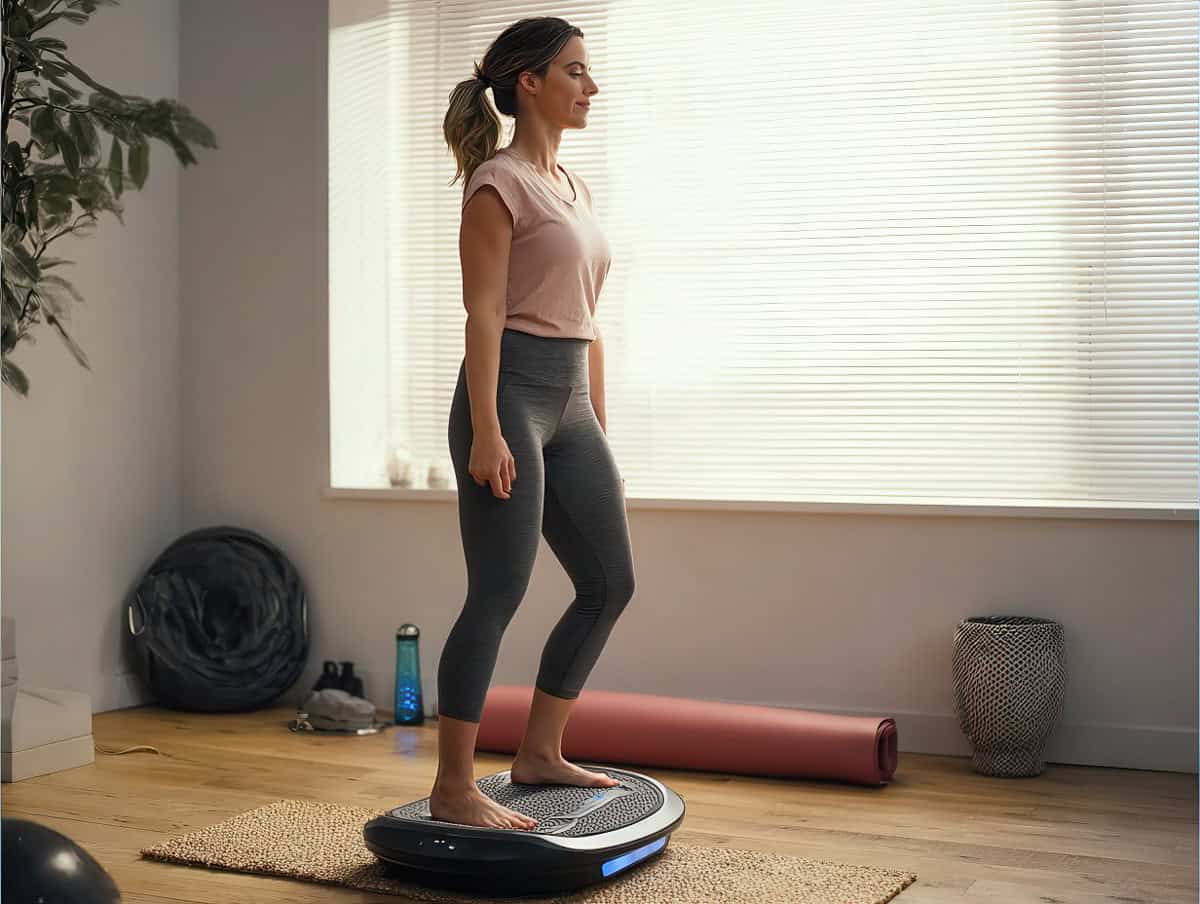
You’ve probably seen one at the gym or on TikTok. A small platform with people just standing or squatting on it while it shakes. It looks simple, maybe even a little silly. But the way it works is actually kind of interesting.
A vibration plate (also called a vibration platform or power plate) sends small, rapid vibrations through your body while you stand, sit, or move on it. These vibrations cause your muscles to contract and relax over and over again—sometimes up to 30 or 40 times per second.
That’s a lot more muscle contractions than you’d get from just standing still. And it’s those tiny, fast contractions that help activate your muscle fibers and boost circulation. Even a short session can make your muscles work harder than they seem to be.
Ways People Use a Vibration Plate
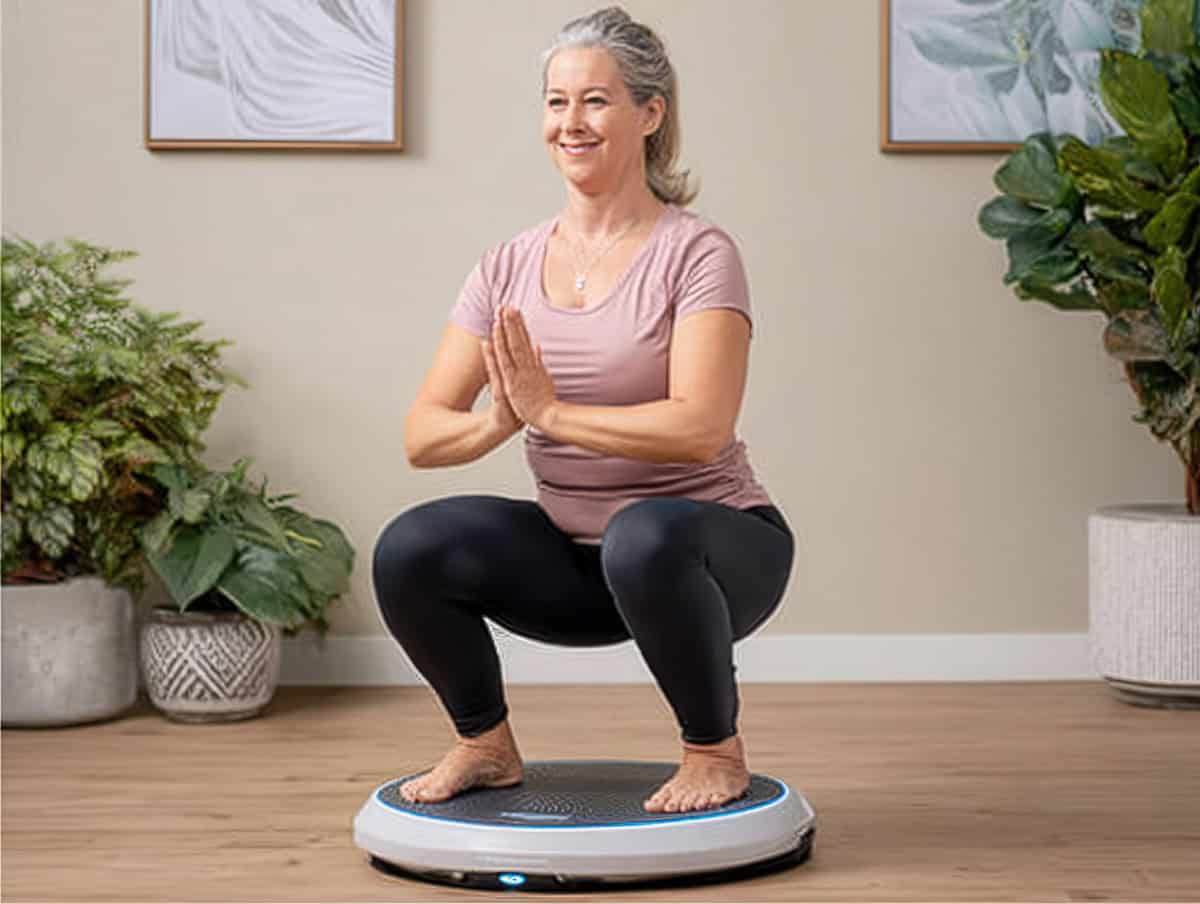
There’s no one right way to use a vibration plate. Some people just stand still on it. Others do whole-body vibration exercises like squats, lunges, or planks. You can also stretch on it or sit and do core work.
I usually keep it simple—some light squats and calf raises while standing on the vibrating plate. Other times, I just stand and let it shake out my legs after a long walk or workout.
The great thing is that it works with your body weight. No need for heavy equipment or complicated moves. It’s low-impact, so even if you’ve got joint issues or you're just starting to move more, you can go at your own pace.
What It Does for Your Body
The effects of whole-body vibration go beyond just muscles. Research suggests it may help your circulatory system by improving blood flow, and some experts believe it also supports your lymphatic system—the system that helps move waste out of your body.
That’s why people often say they feel lighter or more energized after a session. The machine doesn’t just work your legs. It affects your entire body—from your legs to your core to your balance.
In the next section, we’ll break down the real benefits of vibration plates and what you can actually expect to feel if you stick with it.
What Are the Benefits of a Vibration Plate?
A vibration plate can offer real benefits, but like anything else, it depends on your body and your goals. I started using one just to recover after workouts. But once I learned how it works and used it more consistently, I started seeing other changes too.
Research shows that whole body vibration therapy may help with things like strength, balance, circulation, and even bone health. Some results happen fast, but others build over time.
Let’s look at what the science—and real users—say are the most helpful benefits.
1. Builds Muscle Strength and Muscle Mass
The vibrations cause tiny, fast muscle contractions through your legs, hips, and core. That means your muscle fibers are working even if you’re just standing still.
You can get even more out of it by adding low squat positions or doing basic strength training moves like lunges or planks. If you have limited mobility or just don’t have time for long workouts, this can still give your muscles a good challenge.
Over time, this kind of muscle activation can help improve your muscle tone and support your overall muscle strength.
2. Supports Bone Health and Density
This one surprised me. But studies show vibration plates can actually help with bone density—especially in postmenopausal women. The gentle pressure and muscle engagement may stimulate bones and reduce bone loss.
It’s not a cure for weak bones, but it may help maintain bone mass and mineral density, especially when used along with regular exercise and a healthy diet. If you’re at risk for osteoporosis, talk to a physical therapist to see if this could be a good tool for you.
3. Improves Balance and Lowers Fall Risk
As we get older, balance becomes a bigger issue—especially for women. That’s one reason I wanted to try this machine.
Whole body vibration training can help your muscles react faster and feel steadier, which may lower your risk of falls. It’s especially helpful for older adults and people with limited mobility who want to build confidence without doing high-impact moves.
Even just standing on the plate with soft knees can create a positive effect on how your body reacts to movement.
4. Boosts Circulation and Lymphatic Drainage
One of the first things I noticed after using my plate was better blood flow in my legs. They didn’t feel as heavy after workouts.
Vibration may support your circulatory system, helping with blood circulation and moving waste products out of your system. Some people also say it helps their lymphatic system, which controls things like swelling, puffiness, and fluid retention.
While some of the research here is early, many users (myself included) feel it improves lymphatic drainage and lymphatic flow over time.
5. Aids Muscle Recovery and Reduces Soreness
This is probably my favorite benefit. I use my vibration plate a few times a week after workouts. It helps ease muscle soreness and just makes my legs feel better.
Even a three-minute session of whole body vibration can help reduce tightness and improve muscle recovery, especially after strength training. It’s also been used to help people with chronic pain.
If you often feel sore after activity or just want a low-effort way to recover faster, this is worth trying.
6. May Help With Weight Loss and Fat Reduction (When Used Properly)
This part is where a lot of people get confused. Just standing on a vibrating plate won’t melt fat. But when paired with a healthy diet and regular exercise, it may support fat loss by increasing energy burn and engaging muscles.
Some studies show a drop in fat mass when vibration is used in a full-body program. But the marginal benefits are small if it’s the only thing you’re doing.
So yes, it may help with weight loss—but only as part of a full routine. Think of it as a helper, not a magic fix.
7. Possible Cognitive and Hormonal Effects (Early Research)
Some animal studies and small human studies show changes in cognitive functions and levels of stress hormone cortisol after whole-body vibration. The idea is that the movement might help stimulate brain and nerve activity.
That said, there’s still limited research in this area. It’s an interesting possibility, but not a reason to buy a vibration plate on its own.
What Does the Research Actually Say About Vibration Plates — Strength, Circulation & More
If you want to know whether a vibration plate does more than just shake, the honest answer is: yes, but with limits. Researchers studying Whole‑Body Vibration (WBV) — using a vibrating platform — have found some real benefits. At the same time, results vary a lot depending on things like who’s using it, their health, and how they use the machine. Here’s a clear, up-to-date look at what science says.
Evidence That’s Looking Good: Strength, Bone Health & Blood Flow
A recent review of many studies found WBV may help increase muscle performance, strength, balance, and mobility, especially for people who cannot do traditional exercises easily. PMC+2ResearchGate+2
Some research shows that after WBV, circulation improves. In one study, skin and muscle blood flow increased. That points to better circulation through micro‑ and superficial blood vessels. PMC+2PMC+2
For people with bone concerns (for example, older adults or people at risk for bone loss), WBV may help maintain or modestly improve bone density — though results are not always dramatic. MD Anderson Cancer Center+2ResearchGate+2
So if muscle strength, gentle bone support, or a circulation boost sounds helpful, WBV shows promise under the right conditions (good vibration settings, consistent use).
Early Signs of Circulation, Lymph Flow & Fluid‑Balance Benefits
A 2022 study found that local vibration (on skin/muscle) improved microcirculation — meaning more blood flow near the surface. That could help skin, tissue, and fluid movement. PMC
Vibration can stimulate muscle contractions even when you stand still on the plate. These contractions may help blood and lymph flow better — acting like a gentle “pump.” Cancer Rehab PT+2Verywell Fit+2
For people with chronic vein or circulation issues, there’s new data showing WBV may help reduce swelling or edema, improve venous flow, and ease symptoms such as leg heaviness. Ivy League -Trained Vein Doctors+1
That means WBV might be especially helpful for folks who struggle with circulation, swelling, or fluid retention — like many women in midlife or menopause.
Why Results Still Vary (and We Should Stay Grounded)
Not all WBV protocols are the same: frequency, amplitude, duration, and posture all affect results. If vibration is too mild or too short, benefits may be small or zero. PMC+2ScienceDirect+2
Most strong results come from studies on older adults or people with bone/muscle issues. Healthy, already-active people may see less dramatic change. PMC+2ScienceDirect+2
For fluid retention / circulation, research is still thin. Some studies show improved blood flow, but long-term effects on veins, chronic edema, or lymphatic disorders remain unproven. moffitt+2Ivy League -Trained Vein Doctors+2
WBV is best seen as a supplement — not a replacement — for regular exercise, healthy diet, and other therapies when needed. Experts caution it should not replace tried-and-true fitness or medical routines. moffitt+2ScienceDirect+2
What This Means — Especially for Women Over 40 (or Anyone with Circulation/Swelling Concerns)
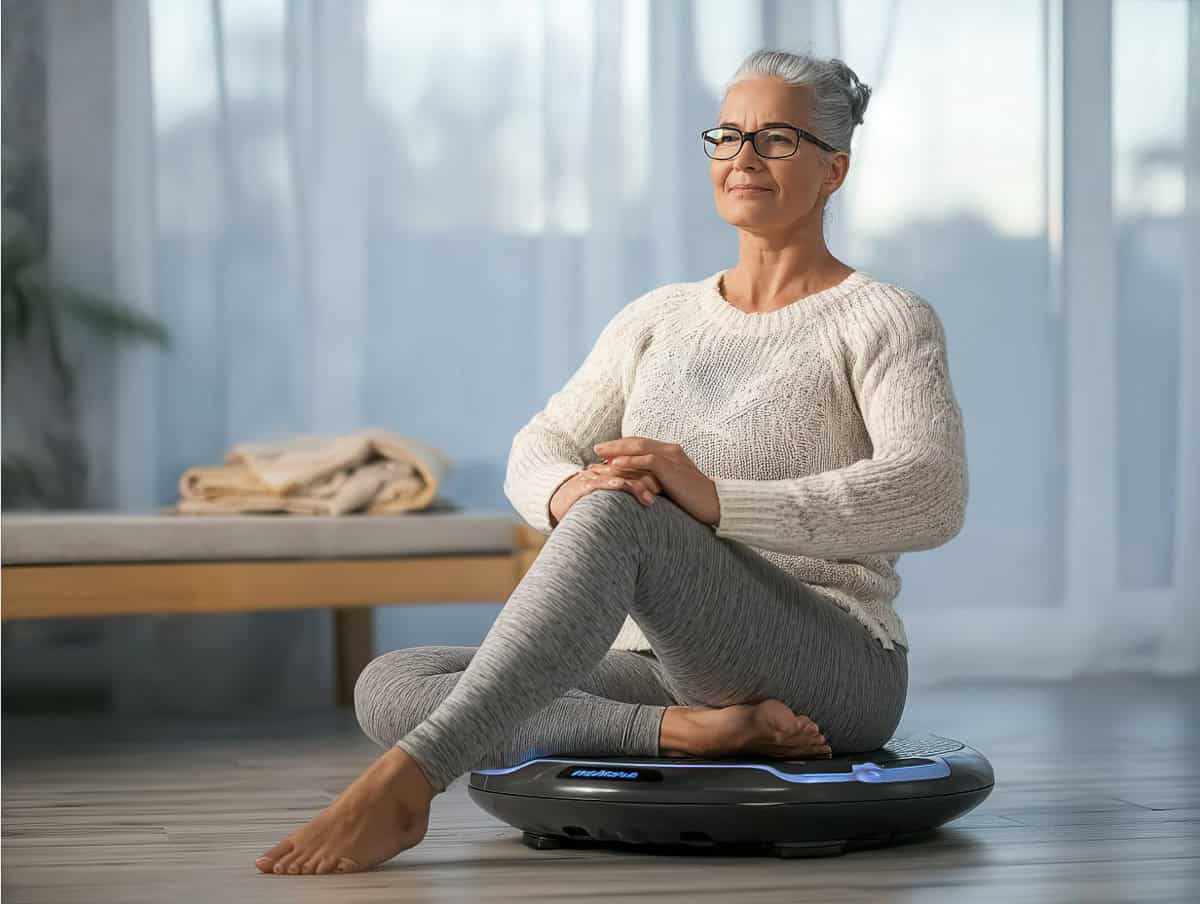
If you’re over 40, dealing with circulation slowdowns, swelling, or bone‑density worries — a vibration plate could be a gentle and useful tool. It’s not a magic wand, but it may help:
to improve muscle strength and support bone health,
to gently boost blood flow and circulation,
to help lymphatic drainage and reduce fluid buildup or swelling, especially in legs, ankles, or areas where circulation gets sluggish,
to give a low-impact movement option on days when walking or strength work feels like too much.
In other words: used consistently, carefully, and at the right settings — a vibration plate could offer a soft boost for circulation, fluid balance, muscle, and bone support. It’s a “helper” more than a “fix,” but for many women over 40, that helper might be just what their body needs.
Who Might Benefit Most From a Vibration Plate?
A vibration plate isn’t just for fitness influencers or athletes. It can actually help real people with real goals—especially those of us trying to take care of our bodies without adding more stress. Whether you’re dealing with joint pain, a tight schedule, or the changes that come with aging, a whole-body vibration platform might be a helpful tool.
Let’s look at who tends to get the most out of it.
Older Adults
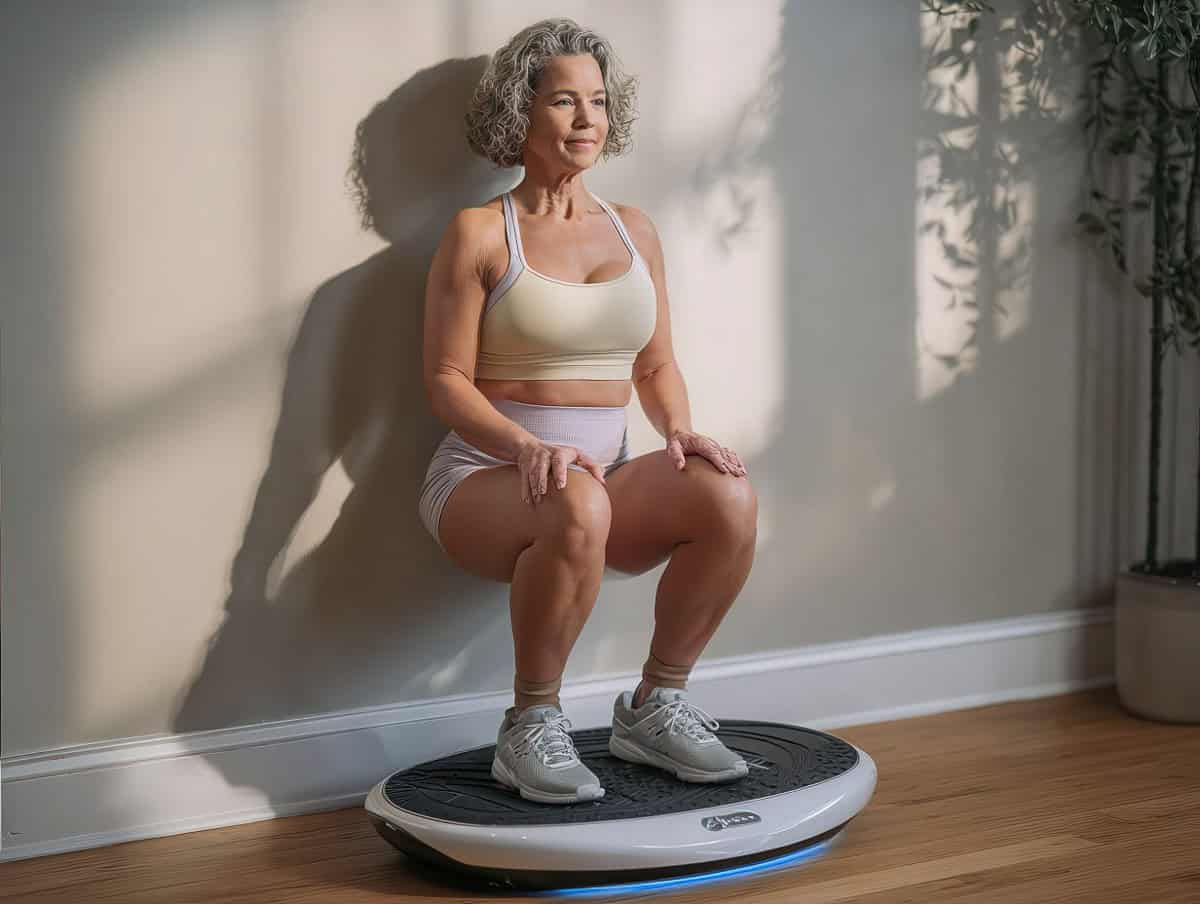
As we get older, it’s harder to maintain strength and balance. Regular workouts can be tough on joints or just feel like too much some days. That’s where whole-body vibration training can really shine.
Studies show that older adults often see big improvements in balance, muscle strength, and even bone support after using a vibration plate consistently. It’s a gentle option that works well for people who want to stay active but need something low impact.
Postmenopausal Women
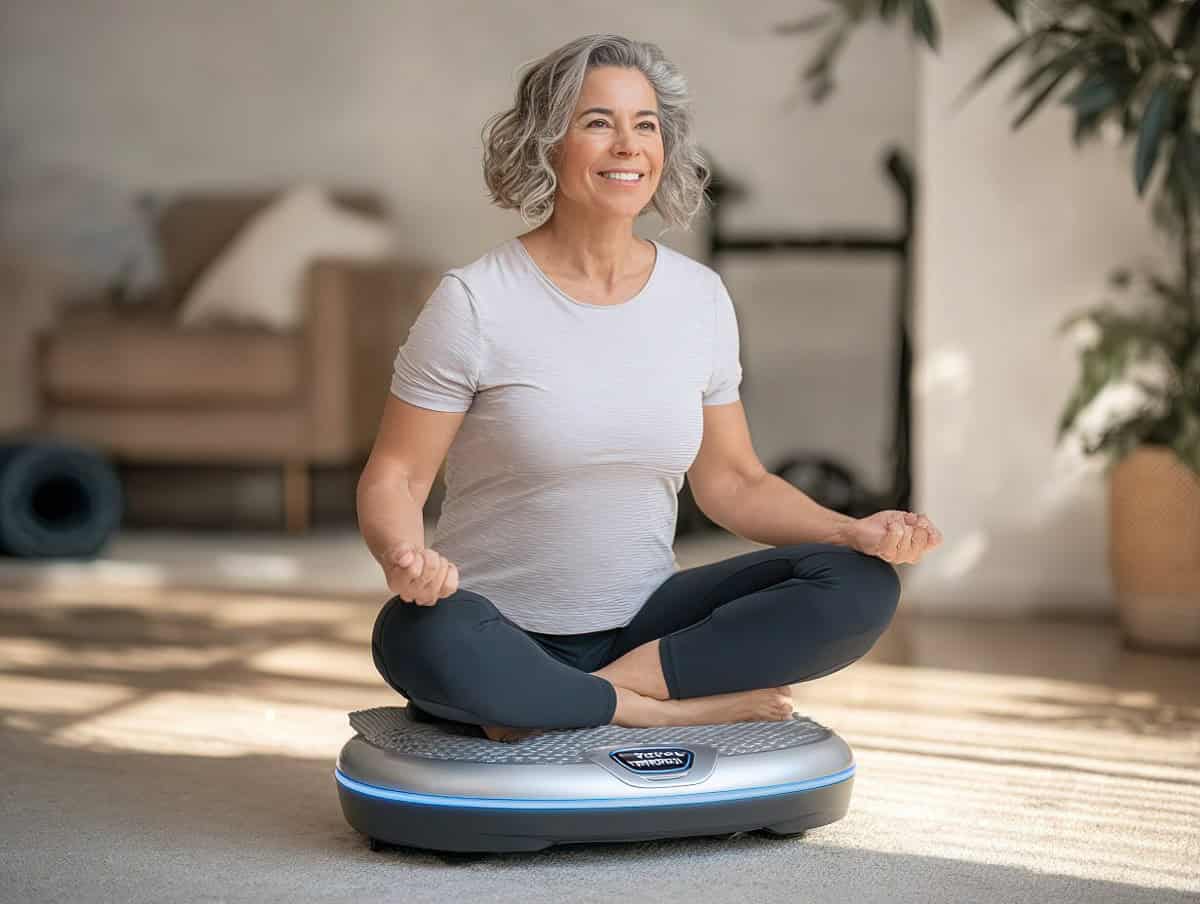
If you’re postmenopausal, you might be noticing changes in your energy, bones, or circulation. That’s completely normal, but it’s also frustrating.
Some studies suggest that postmenopausal women can maintain or even improve bone density with the help of vibration training. It may also support circulation and reduce swelling in the legs, which is something many of us deal with more in our 40s and 50s.
Even just 10 minutes a few times a week can make a difference over time.
People With Chronic Pain or Limited Mobility
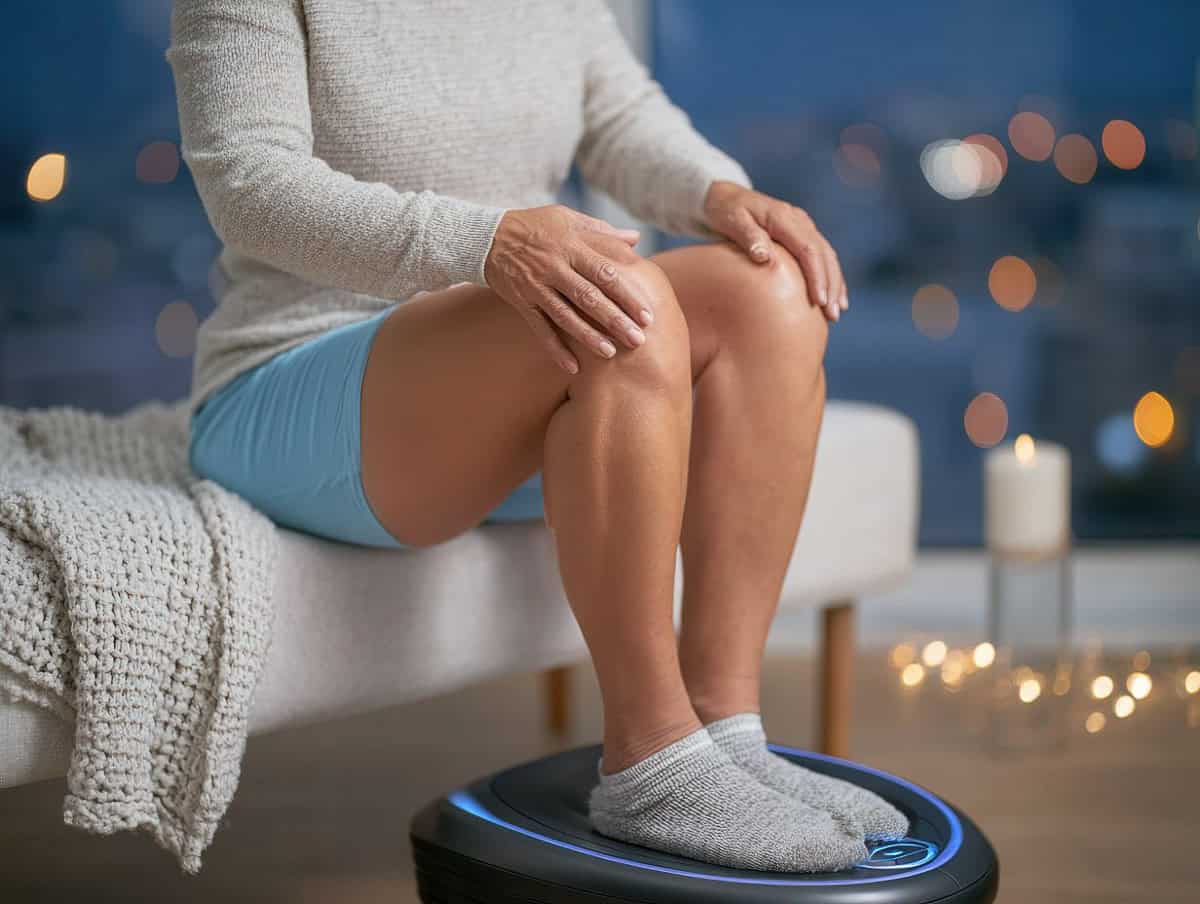
For people with chronic pain, recovering from surgery, or dealing with limited mobility, regular workouts can feel impossible. A vibration plate may give you a way to activate your muscles without overdoing it.
It doesn’t take long, and you don’t need to move much. Even standing or sitting on the plate can start to gently wake up your muscles and support circulation. Always talk to your doctor or physical therapist first, especially if you’re dealing with a health condition.
Busy People Who Want More in Less Time
If you're short on time but still want to feel stronger and more balanced, this might be for you. A lot of moms (myself included) need quick wins that fit into a busy day.
Vibration plate work can take as little as 5–15 minutes. It’s not a magic fix, but it’s an easy way to get your body moving without needing a full workout or a trip to the gym.
People With Chronic Pain or Limited Mobility
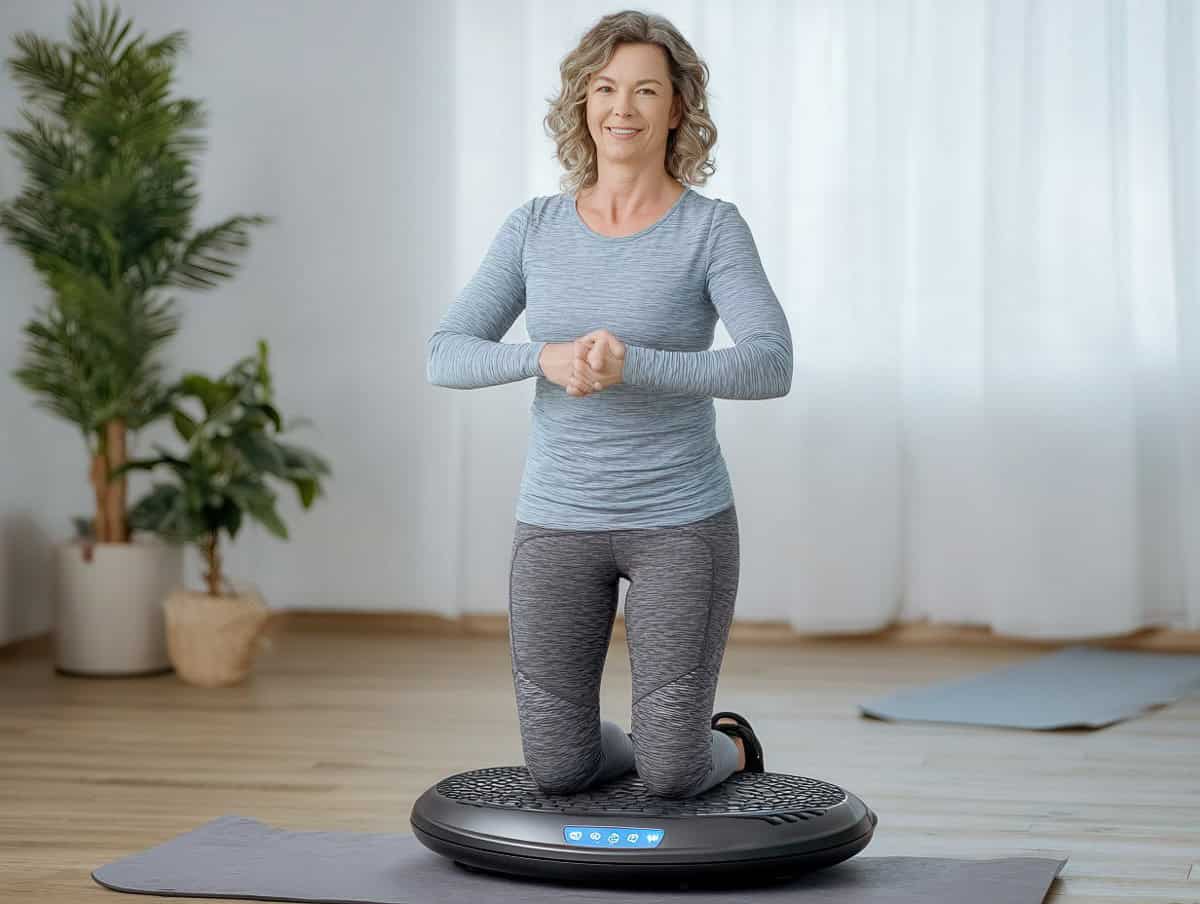
Some forms of exercise just don’t work for everybody. If running or high-impact strength workouts aren’t for you, a vibration plate offers a gentle alternative.
It can support your fitness goals without putting stress on your joints. That makes it a good match for people recovering from injury, dealing with joint pain, or just easing back into movement.
My Experience With Vibration Plates and Poor Circulation
A few years ago, I was diagnosed with pulmonary artery disease—which for me showed up as very poor circulation in my legs. My feet would swell up by the end of the day. I had to wear compression socks daily and take a water pill to deal with fluid retention. Honestly, it was frustrating and exhausting.
I started using a vibration plate regularly—mainly because I wanted to see if it would help with my circulation. And to my surprise, it really did. My legs felt lighter. The swelling went down. I stopped needing my daily water pill, and only reached for compression socks on really long days.
Another thing I noticed? It helped so much with recovery after strength training. Normally I’d be sore for days after heavy leg day workouts, but when I used the vibration plate for just a few minutes afterward, my legs felt less tight and stiff the next morning.
It’s not a magic cure. I still have to take care of myself. But for circulation and recovery, the vibration plate has made a real difference in my life—and I’ve stuck with it ever since.
Is a Vibration Plate Safe for Everyone?
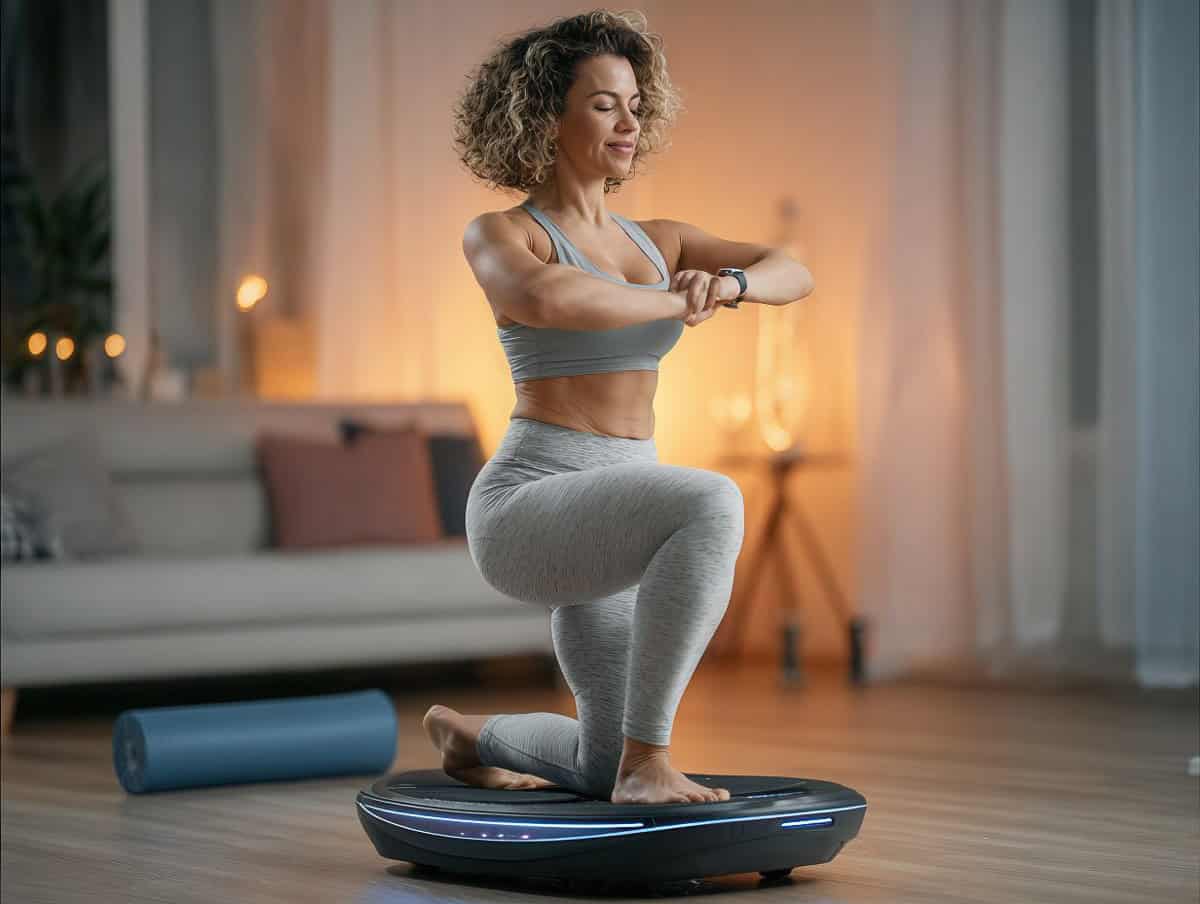
A vibration plate can be a helpful tool, but it’s not right for everyone. Like any form of exercise or therapy, it’s important to know when to be careful and when to ask questions first.
If you’re thinking about trying one for the first time, here’s what you should know.
Talk to a Healthcare Provider First
If you have certain health conditions, it’s best to check with your doctor or healthcare provider before using a vibration plate.
This is especially important if you:
- Are a pregnant woman
- Have a heart condition, pacemaker, or circulation disorder
- Have a history of blood clots, stroke, or seizures
- Are recovering from surgery or have limited mobility
Even though vibration training is low impact, the repeated movement and muscle stimulation can affect your body in ways you don’t expect. A quick conversation with your doctor can help you decide if it’s safe for your situation.
Caution for Back and Joint Issues
If you’ve ever dealt with lower back pain, knee problems, or joint instability, be cautious. The vibration could make those areas feel worse if not used correctly.
Start slow. Use soft knees. Avoid standing stiff or locking your joints while the machine is on.
People with arthritis or chronic joint pain should also go easy and talk to a professional before starting.
Start Small and Listen to Your Body
Even if you’re healthy and cleared to use it, keep your first time short. Try standing on the machine for just one to two minutes. See how your body reacts.
Some people feel lightheaded, sore, or off balance after their first few sessions. That’s normal for new users. Increase your time slowly and take breaks as needed.
When used wisely, a vibration plate can offer great benefits. But it’s always smart to ease in and make sure it works well for your body.
How to Use a Vibration Plate for Best Results
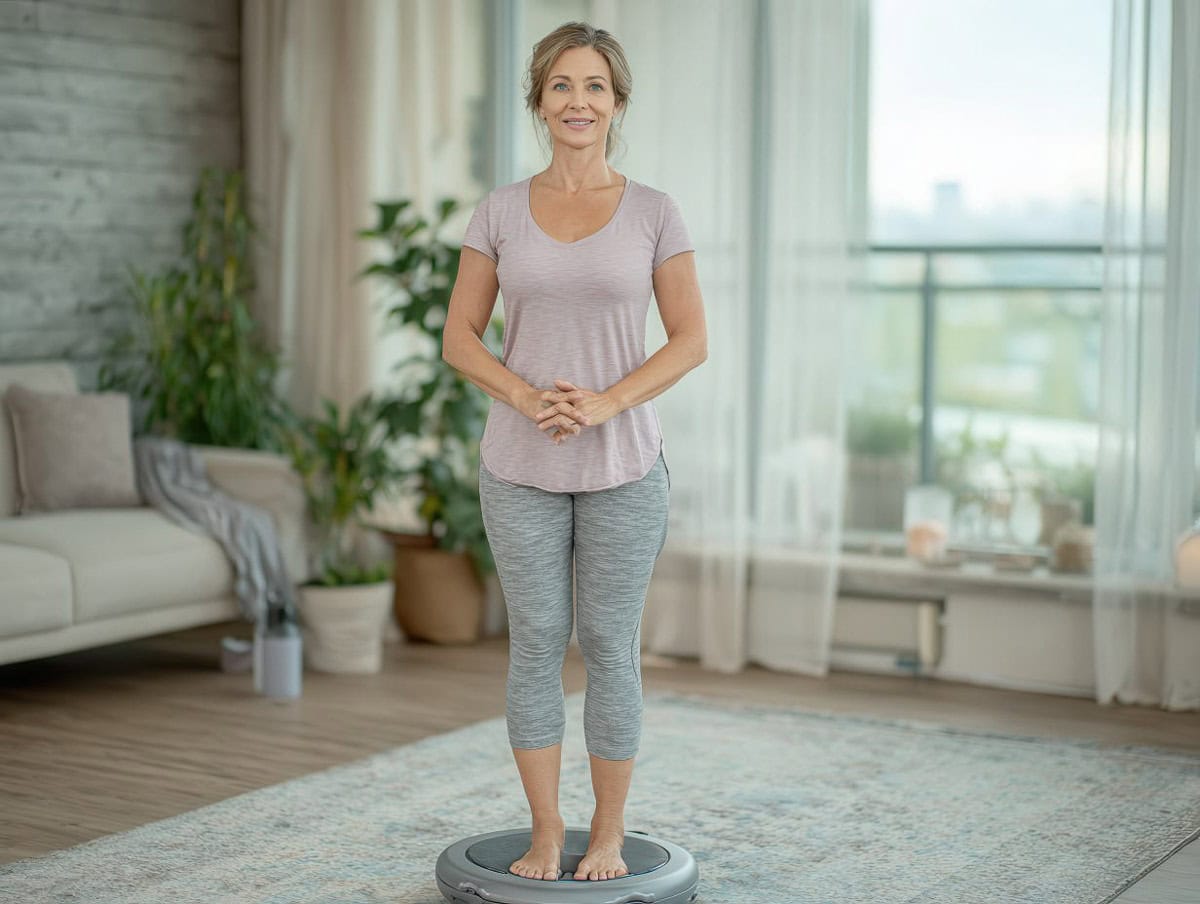
If you’re new to vibration plate training, start small. You don’t need to jump into long sessions or fancy moves. Just a few simple exercises can help your body adjust and begin to see results.
The goal is to get your muscles moving, support better circulation, and build strength over time—all without spending hours working out.
Start Simple With Beginner Exercises
The best way to get started is to keep it easy. You want your body to feel what the vibration of the machine is like and how your muscles react.
Here are a few beginner-friendly vibration plate exercises you can try:
- Stand with soft knees for 1 to 2 minutes. Focus on balance and breathing.
- Try wall-supported squats. Keep the movement small and slow.
- Do a few calf raises. These help with leg strength and ankle stability.
- Add light stretches while standing on the plate. This can help loosen tight muscles and boost circulation.
Stick with these moves for your first week or two. Just five minutes is enough when you’re starting out.
Progress Over Time
As your body gets used to it, you can slowly increase your session time. Most people work up to 10 to 15 minutes, two to four times a week.
You can also add more movement:
- Include basic strength moves like lunges or planks.
- Use resistance bands or light weights for more challenge.
- Try short post-workout sessions for muscle recovery.
Remember, even short sessions can help. With less time, you can still support your strength, balance, and circulation goals.
As always, listen to your body. If something feels off, pause and try again later. The more consistent you are, the better your results will be.
What to Look for in a Home Vibration Plate (So You Get One That Works)
If you decide to get a vibration plate for home use, it helps to know what to look for. Not all vibration boards — or whole‑body vibration plates — are the same. Here’s how to pick one that works well and is safe for you.
Vibration Settings Matter: Frequency & Vibration Type
When you compare plates, check their frequency and vibration type carefully. These affect how your body responds.
- For muscle strength or tone, most research shows a frequency around 30–40 Hz works well.
- Lower frequencies — around 20–25 Hz — are more gentle, and can be good for blood flow, circulation, or recovery if you want a softer vibration.
- Also pay attention to vibration type / motion pattern. Many plates use vertical (up‑and‑down) vibrations, which tend to be better for circulation or recovery. Others use oscillating (pivot/side‑to‑side) motion, which may suit balance and stability goals better.
So choose a plate that lets you adjust frequency (and ideally amplitude) so you can match settings to your goals — strength, circulation, recovery, or balance.
Features to Watch For in a Home Vibration Plate
Not all plates are built the same. Some features make a big difference if you plan to use it at home regularly.
- Strong, stable base / heavy build — A heavier vibration plate tends to be more stable and less likely to wobble. That helps ensure the vibration transmits effectively through your body.
- Adjustable settings (frequency, amplitude, speed levels) — This lets you customize your sessions depending on your goals or how you feel.
- Pre‑set programs or simple controls — Makes it easier if you don’t want to think too much about settings.
- Good warranty and build quality — Vibration plates have moving parts, so a sturdy motor and warranty give peace of mind for long‑term home use.
If you pick a plate with these qualities, you’ll get a tool that’s safer, lasts longer, and adapts to changing needs — whether you’re using it for circulation, recovery, or strength.
Safety & What to Avoid
Because vibration plates create motion in your whole body, it’s important to choose one that’s appropriate for your health and use. Experts recommend:
- Stay within safe frequency ranges. Many studies use plates with frequencies between 20–50 Hz.
- Avoid plates that advertise high intensity with big amplitude (large vertical displacement) unless you know what you’re doing. High‑magnitude vibration increases risk of discomfort or injury.
- Use a plate with good stability and solid motors, especially if you plan on standing or doing dynamic moves. Wobbly plates or cheap models may transmit vibrations poorly or feel unsafe.
Matching the Plate to Your Goals: Quick Guide
| Your Goal / Need | What to Look For in a Plate |
|---|---|
| Gentle circulation, swelling, fluid flow | Lower frequency (20–25 Hz), stable vertical vibration, adjustable settings |
| Muscle strength, muscle tone, fitness | Frequency around 30–40 Hz, heavier motor, adjustable amplitude/speed |
| Balance, stability, flexibility | Oscillating or multi‑axis plates, lower to mid frequency |
| Home use, small space, ease | Compact build, simple controls, pre‑set programs, good warranty |
Shop our picks
My Top Pick: LifePro Rumblex 4D Vibration Plate
This is the vibration plate I personally use — and I’ve had great results with it. A few years ago, I was diagnosed with pulmonary artery disease, which caused really poor circulation in my legs. At the end of the day, I had to wear compression socks and take a daily water pill for the swelling. I decided to give the vibration plate a try, just to see if it would help. To my surprise, it made a noticeable difference. My legs felt better, the swelling went down, and I eventually stopped needing the daily pill.
It also helped with muscle recovery, especially after strength training workouts. I could feel my legs bouncing back faster. That’s what made me stick with it — it actually worked.
From a technical standpoint, the LifePro Rumblex 4D checks all the boxes the studies talk about:
- 4D motion means the platform doesn’t just vibrate up and down — it moves in multiple directions (oscillation, lateral, and pulsation). This helps stimulate circulation and engage more muscles.
- The frequency range is around 4–40 Hz, which is right in line with what studies used for circulation, muscle tone, and even bone density. That really stood out to me.
- The non-slip base feels sturdy. I like that I can use it barefoot, and it comes with resistance bands if you want to level up.
- It’s great for home use. You can start with just a couple minutes and build up over time.
I’ve also read that rehab centers use similar vibration patterns to support lymphatic flow and fluid drainage, which lines up with what I experienced. So if you're looking for something versatile that supports circulation, muscle tone, and recovery — this one’s worth it.

If Rumblex 4D Is More Than You Want to Spend — The LifePro Waver Plate Is a Great Budget Pick
If you love the idea of a vibration plate but don’t want to spend a lot, the LifePro Waver Vibration Plate is a solid, wallet‑friendly option. It may not be as fancy as a 4D machine — but it still delivers many of the basics that make vibration‑plate work worthwhile.
Here’s why I think Waver is a good pick if you’re on a budget, or trying a plate out for the first time:
Why Waver Still Works — Especially If You’re Budget‑Mindful
- The Waver plate uses oscillating vibration rather than multiple‑direction “4D” motion, but that’s still enough to stimulate muscles and support circulation and recovery. This makes it a good tool for gentle whole-body vibration training or for days when you want a light session with less time and little setup.
- It’s usually much less expensive than the 4D plates, which means lower upfront cost but still access to vibration plate work at home.
- For many people, especially those new to vibration plates, women over 40, or anyone looking for easier circulation support, lymphatic flow, or gentle muscle activation — the Waver will likely cover their needs just fine. Many expert‑review lists put Waver among the best plates for beginners or home use.
- It’s compact, easier to store, lighter, and simpler to use — which makes it a good choice if space is tight or you don’t want to fuss with complex settings.

What You Trade Off — Compared With a Premium Plate (Like Rumblex 4D)
Because Waver is simpler:
- It doesn’t offer multi‑direction or “4D motion,” so the muscle activation or circulation / lymphatic stimulation might be milder compared with a multi‑motor plate.
- You may not get as strong bone‑stimulus or maximal muscle‑strength benefits that come with higher-intensity vibration — helpful if your goal is high strength, bone density support, or deeper recovery work.
- For people with serious circulation issues or chronic swelling (like many women over 40 or menopause-related issues), the effect may be more subtle.
Who the Waver Plate Is Best For
The Waver is a great fit if you’re:
- Trying out a vibration plate for the first time (on a budget)
- Looking for a gentle, low‑impact way to support circulation, circulation‑related swelling, or recovery
- On a restricted budget but still want the benefits of home use vibration plate work
- Wanting a quick “bonus” for muscle tone, lymphatic support, or movement on busy days
My Recommendation — Based on Your Needs
- If you want full power: muscle activation, better circulation, strong recovery after workouts, or more serious bone/muscle support — stick with the Rumblex 4D.
- If you want a budget‑friendly, gentle, easy‑to-use plate — especially if you’re mostly interested in circulation support, light muscle activation, or occasional recovery sessions — the Waver is a strong, no‑frills choice.
FAQs About Vibration Plate Benefits
Do vibration plates really work for weight loss?
They can help support weight loss when used consistently alongside healthy eating and movement. The plate increases muscle engagement, burns calories, and may help reduce fat when combined with a balanced routine. It’s not a magic fix — but it can give your efforts a boost.
How long should you use a vibration plate?
Most people start with 5–10 minute sessions, 2–4 times a week. You can slowly work up to 15 minutes per session if your body responds well. Listen to how you feel after each use, especially in the beginning.
Can vibration plates replace traditional exercise?
Not really. A vibration plate is a great complement to regular workouts — not a total replacement. It can help with muscle tone, circulation, and recovery, but it’s not the same as cardio, strength training, or stretching.
Are vibration plates safe for older adults or people with injuries?
They can be — but check with your doctor first. Especially if you have joint pain, lower back issues, or other health conditions. Many women over 40 (and well beyond) use them safely at home. Start with gentle sessions and build up.
Final Thoughts: Is It Worth Trying a Vibration Plate?
If you’re looking to support your overall health, a vibration plate can be a smart tool to add to your routine. Research shows it may help improve strength, balance, and recovery — especially for older adults, postmenopausal women, and those with limited mobility. Even short, consistent sessions can lead to a beneficial effect over time.
It’s not a miracle device. You still need to move your body, eat well, and get enough rest. But vibration plate benefits can enhance your body’s ability to bounce back, feel stronger, and recover faster — especially if you’re over 40 or managing hormonal shifts.
I’ve personally noticed a significant improvement in circulation and recovery since adding it to my week. That alone made it worth trying.
Still, it’s a good idea to check in with your healthcare provider before starting — especially if you’re dealing with injuries or ongoing health conditions. A physical therapist may also help you get started safely.
Bottom line? If it fits your goals and lifestyle, a vibration plate could be a great addition to your health routine.